
Pinanga veitchii
Pinanga veitchii
Description
Growing requirements
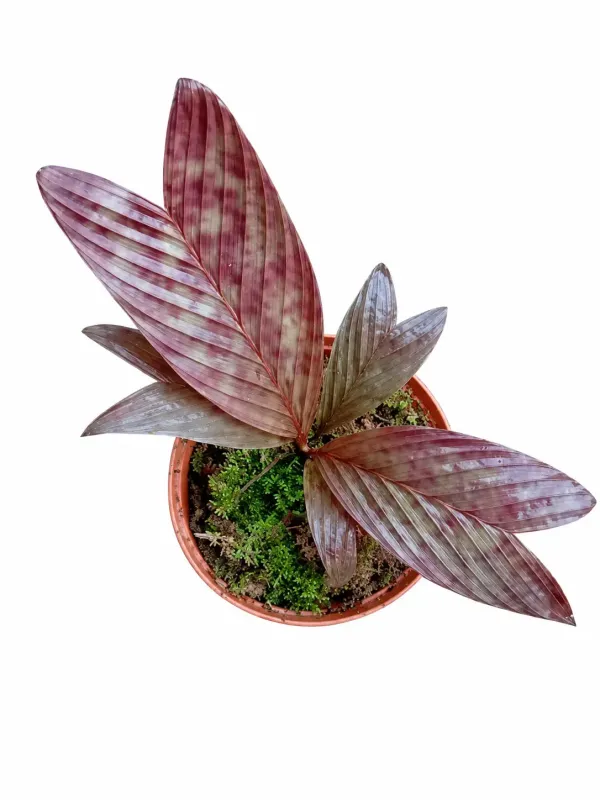
Pinanga veitchii is an exotic palm species belonging to the Arecaceae family. Native to the tropical rainforests of Borneo (Kalimantan), it is highly prized for its striking foliage, which often features unique patterns and colors that evolve as the plant matures.
For successful cultivation, Pinanga veitchii requires a warm and stable environment with temperatures maintained between 22°C and 28°C. Being a shade-loving species, it thrives best in locations with filtered light, as direct sunlight can easily damage its sensitive fronds.
The substrate must be well-draining, acidic, and rich in organic matter. A professional growing mix should contain peat moss, pine bark, and perlite to ensure the root system receives adequate oxygen while retaining necessary humidity levels for optimal development.
Humidity is the most critical factor for this palm. Growers must ensure the surrounding air remains humid, ideally above 70%, which can be achieved through regular misting, the use of humidifiers, or by placing the pots on moisture-retentive pebble trays.
Routine maintenance involves balanced feeding during the growing season using a high-quality palm fertilizer. It is crucial to use fertilizers with micronutrients to prevent chlorosis, which frequently affects the complex leaf structures of this specific palm variety.
Main diseases and pests
Common pests include spider mites and mealybugs, which are particularly attracted to the plant in low-humidity environments. Periodic inspection of the undersides of the leaves is recommended to catch infestations before they spread across the crown.
Root rot is the most common pathology associated with improper watering. To prevent this, ensure that drainage holes are never blocked and that the soil is allowed to dry slightly at the surface before the next irrigation event is performed.