
Pinanga gracilis
Pinanga gracilis
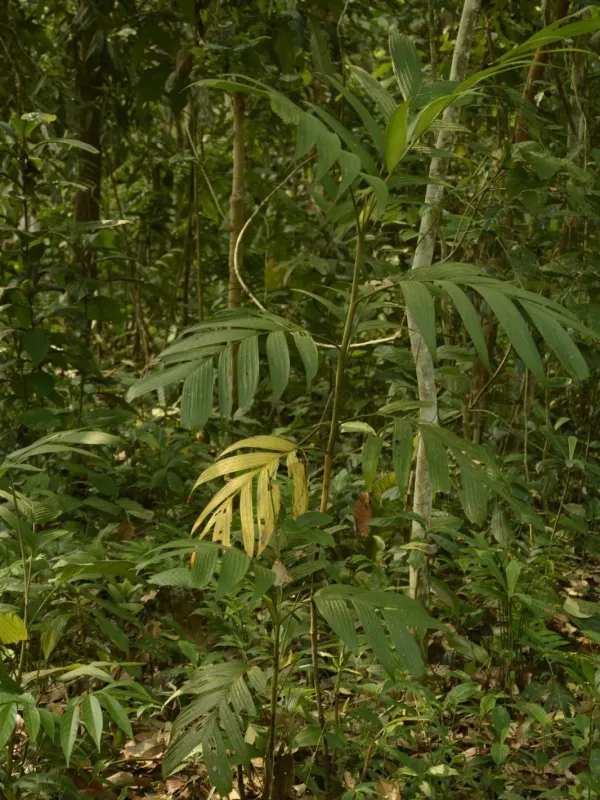
Description
Growing requirements
Pinanga gracilis belongs to the Arecaceae family. This elegant tropical palm is native to the understory of humid rainforests in Southeast Asia, where it thrives in shaded, protected environments.
The plant has strict temperature requirements. It is a heat-loving species that does not tolerate cold drafts or sudden temperature drops below 15 degrees Celsius.
For cultivation, a light, well-draining, and humus-rich substrate is essential. The soil pH should be neutral or slightly acidic to ensure optimal nutrient absorption and root health.
This palm prefers bright, filtered light. Direct sunlight can easily scorch its delicate foliage, so it should be kept in partial shade during indoor or greenhouse growth.
High relative humidity is critical for the health of Pinanga gracilis, mimicking its natural rainforest habitat. Regular misting or the use of humidifiers is a mandatory part of its maintenance.
Main diseases and pests
The primary pests affecting this palm are spider mites and mealybugs. These thrive in environments with low humidity and poor ventilation around the leaves.
Root rot is a major threat, usually caused by overwatering or soil compaction that prevents proper drainage. This fungal condition can quickly destroy the plant's root system.
Leaf spot diseases may appear if foliage is kept wet in cool, poorly ventilated conditions. Prevention focuses on keeping the leaves dry and ensuring good air circulation.
Effective management of pest infestations involves the application of systemic insecticides or acaricides, depending on the type of pest identified during inspections.
Frequent visual monitoring, especially of the undersides of the leaflets, allows for the early detection and management of any biotic threats before they become severe.