
Pinanga disticha
Pinanga disticha
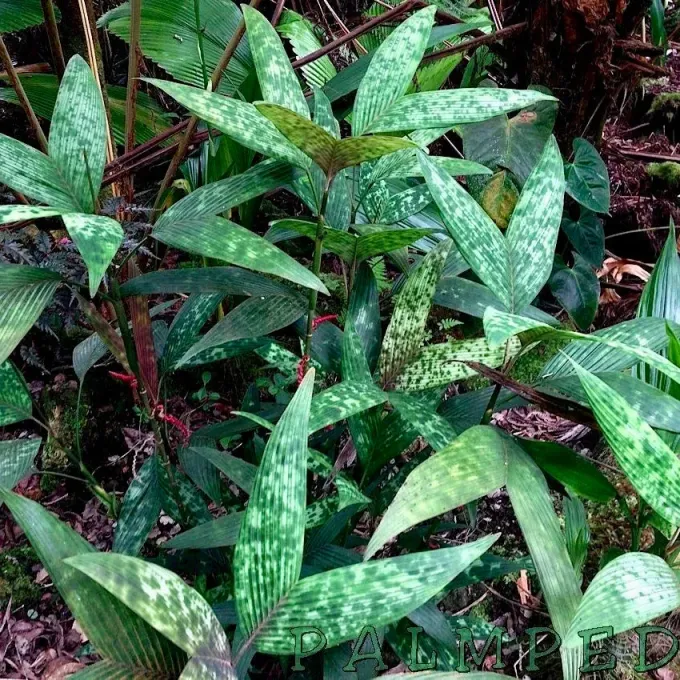
Description
Growing requirements
Pinanga disticha is a highly ornamental member of the Arecaceae (palm) family. Originating from the dense, humid rainforests of Southeast Asia, this species has evolved to thrive in low-light, high-humidity environments, making it a prized specimen for indoor cultivation.
The plant is distinct for its distichous leaf arrangement, where the fronds emerge in two clear opposite rows. This unique structural geometry makes it a favorite among collectors and enthusiasts of rare tropical plants who seek compact, slow-growing botanical specimens.
Optimal growth requires a climate that mimics its tropical home, specifically maintaining temperatures between 20°C and 26°C. It is extremely sensitive to low temperatures and cold drafts, both of which can cause rapid leaf chlorosis and eventual tissue necrosis.
Regarding soil, the species demands a well-draining, nutrient-rich substrate, preferably a blend of organic peat, forest mulch, and perlite. A high moisture level in the substrate must be balanced with aeration; otherwise, the root system is highly prone to asphyxiation.
The primary economic use of this plant is in the horticultural trade, specifically for high-end interior landscaping and conservatory displays. It is not a commercial crop for food or fiber, but rather a niche aesthetic asset for botanical gardens and specialized collectors.
Main diseases and pests
The most common pests affecting Pinanga disticha in confined spaces include spider mites and mealybugs. These infestations typically flourish when relative humidity levels drop below 60%, necessitating regular misting and periodic inspection of the leaf axils.
Root rot, often caused by Phytophthora species, remains the most significant physiological threat to the plant. Over-watering in low-light conditions creates anaerobic soil environments that quickly compromise the palm's health, leading to yellowing leaves and systemic plant collapse.