
Pinanga crassipes
Pinanga crassipes
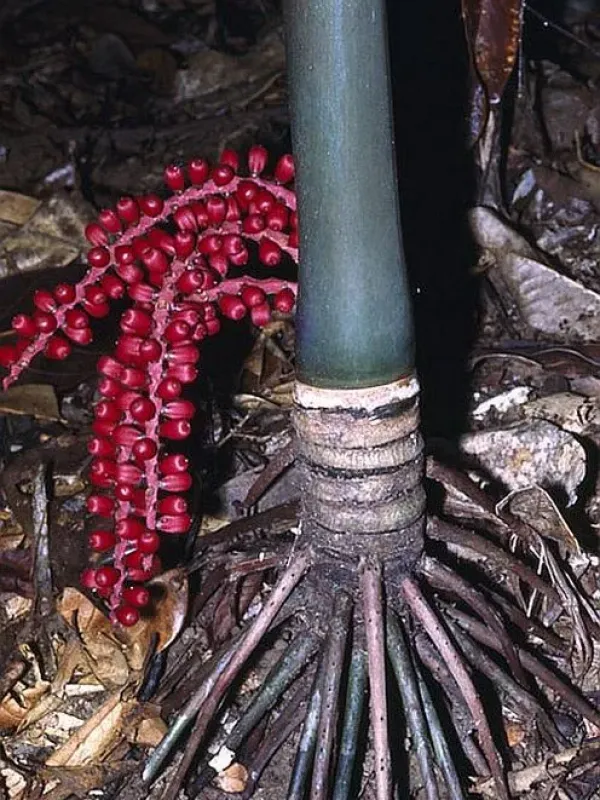
Description
Sowing dates
Propagation of Pinanga crassipes is primarily achieved through seed germination. Since the plant is a native of tropical undergrowth, successful sprouting requires a consistently warm ambient temperature, ideally between 25–28°C.
Freshly harvested seeds exhibit the best germination rates, so it is highly recommended to sow them immediately after collection. Soaking seeds in warm water for twenty-four hours can help soften the tough outer husk, facilitating easier germination.
The growing medium must be light, porous, and possess excellent drainage characteristics. A mixture of coconut coir and perlite is ideal for creating an optimal microclimate that supports root system development in the early stages.
Containers should be kept in a greenhouse-like environment with high humidity, ensuring they are protected from direct sunlight. Periodic ventilation of the sowing containers is necessary to prevent the formation of mold on the soil surface.
The germination period can be extensive, often lasting from several months up to half a year. Maintaining consistent moisture levels in the substrate without inducing waterlogging is crucial for the health of the emerging seedlings.
Growing requirements
Pinanga crassipes belongs to the Arecaceae family and naturally thrives in the understory of Southeast Asian tropical forests. This species demands specific environmental conditions, preferring filtered light or deep shade.
For healthy growth, the plant requires a humid and warm climate free from drastic temperature fluctuations. The ideal growing temperature ranges between 20–25°C, and temperatures falling below 15°C can be detrimental or fatal to the plant.
The soil should be rich in organic matter, slightly acidic, and highly permeable. It is recommended to use specialized potting mixes designed for ornamental foliage palms, supplemented with vermiculite to improve aeration.
High relative humidity is the most critical factor for the successful cultivation of this palm. In indoor environments, frequent misting or the use of mechanical air humidifiers is mandatory to prevent leaf tip burn.
During the active growing season, the plant requires regular feeding with a balanced, micro-nutrient-rich fertilizer, ensuring it has a low salt index to protect the sensitive root system.
Main diseases and pests
The primary threats to this palm species are common indoor pests that thrive in tropical-like microclimates. Spider mites are frequent attackers when the ambient air humidity is insufficient.
Mealybugs are another significant pest that can spread rapidly throughout the plant, severely compromising its immune system. Treatment involves the use of systemic insecticides or targeted applications of rubbing alcohol on infested areas.
Scale insects may colonize the leaf blades and petioles, feeding on cell sap, which leads to leaf deformation and the development of unsightly necrotic spots.
Fungal pathogens, such as root rot, frequently develop due to improper watering habits and inadequate drainage. This condition is typically identified by the darkening of the stem base and the wilting of foliage.
To mitigate disease risks, growers must strictly adhere to a disciplined irrigation schedule, ensure consistent airflow around the plant, and perform regular inspections for early signs of infestations.