
Pinanga malaiana
Pinanga malaiana
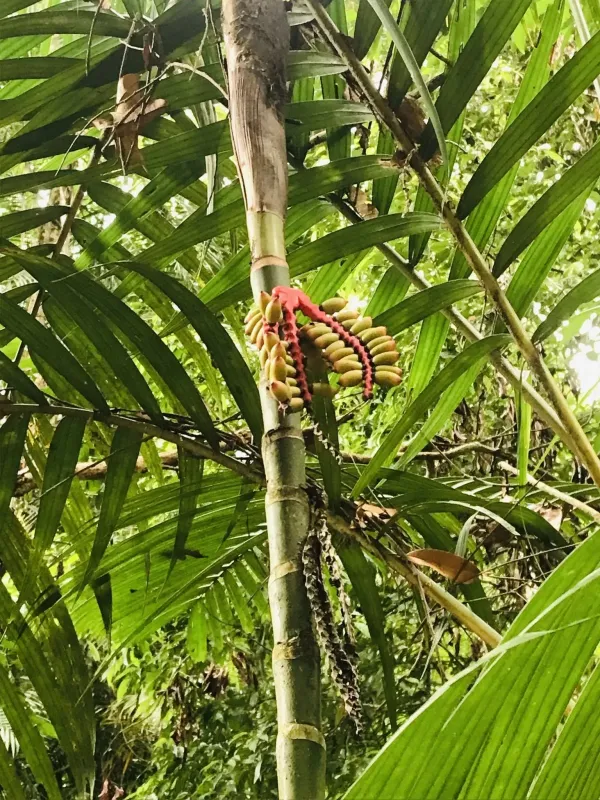
Description
Growing requirements
Pinanga malaiana is a remarkable member of the Arecaceae family, native to the tropical rainforests of Southeast Asia. This palm species is characterized by its slender stems and lush pinnate foliage, which make it a popular specimen for tropical botanical collections and conservatories.
To ensure healthy growth, the plant requires a consistently warm environment, ideally ranging between 20 and 28 degrees Celsius. Exposure to cold drafts or temperatures below 15 degrees Celsius can cause significant physiological stress and lead to permanent damage to the foliage.
Soil requirements are centered on excellent drainage and high organic content. A mix consisting of peat moss, pine bark, and perlite provides the necessary structure to support root health while preventing the waterlogging that often leads to root rot in tropical environments.
Light levels should be kept in the moderate to bright indirect category. Direct sunlight is generally unsuitable for Pinanga malaiana, as it is adapted to the filtered light of the rainforest canopy, and intense solar radiation will quickly scorch the delicate leaflets.
Watering frequency should be adjusted according to the ambient humidity and seasonal growth cycles. During the active growing season, keep the substrate consistently moist. In winter, allow the surface layer of the soil to dry slightly between waterings to maintain a healthy root respiration rate.
Main diseases and pests
Common pests affecting this species include spider mites, which thrive in low-humidity environments, and mealybugs, which tend to congregate in the leaf axils. Frequent monitoring and the use of insecticidal soaps can manage these populations before they cause structural damage.
Fungal issues, such as leaf spot or stem rot, are primarily caused by excessive overhead watering or stagnant air. Maintaining a steady airflow around the plant canopy is essential for preventing these pathogens from spreading in a greenhouse setting.