
Pinanga riparia
Pinanga riparia
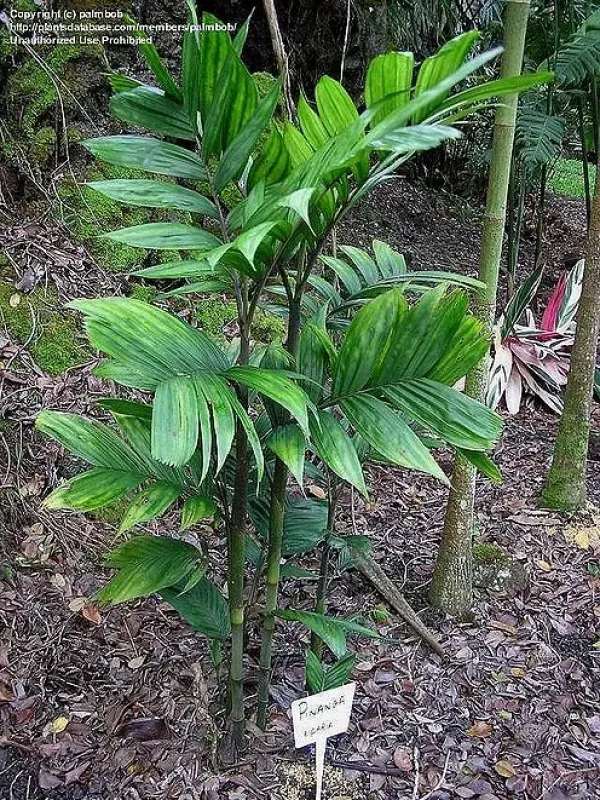
Description
Growing requirements
Pinanga riparia is a distinct species of palm within the Arecaceae family, native to the tropical rainforests of Southeast Asia. It is widely recognized for its clustering growth habit and its preference for riparian habitats, meaning it thrives near streams and rivers.
To successfully grow this palm, one must replicate its natural tropical environment. It requires high ambient humidity, consistent warmth, and protection from cold drafts. It is strictly a non-hardy plant that cannot survive freezing temperatures.
The ideal growing medium should be a well-draining, nutrient-rich potting mix that mimics forest floor conditions. Maintaining consistent soil moisture is vital; the plant should never dry out completely, yet it must not sit in waterlogged soil to avoid root issues.
Pinanga riparia is primarily utilized in the nursery trade as a specialty ornamental plant. Its graceful, slender stems and pinnate leaves make it highly desirable for indoor gardens, botanical displays, and conservatory settings where tropical aesthetics are emphasized.
Cultural practices involve supplemental fertilization during the growing season using a balanced, micro-nutrient-rich liquid fertilizer. Periodic leaf misting is highly recommended to combat dry indoor air and ensure the foliage remains lush and healthy.
Main diseases and pests
The most frequent pests attacking this palm are spider mites and scale insects, which often thrive in indoor conditions with poor ventilation. Regular monitoring and the application of mild horticultural oils are recommended for effective management.
Root rot is the most serious disease risk, typically triggered by improper irrigation or soil compaction. Preventing this requires a high-quality drainage layer at the bottom of the container and ensuring the pot is not left standing in water trays.