
Berlandier's goosefoot
Chenopodium berlandieri Moq.
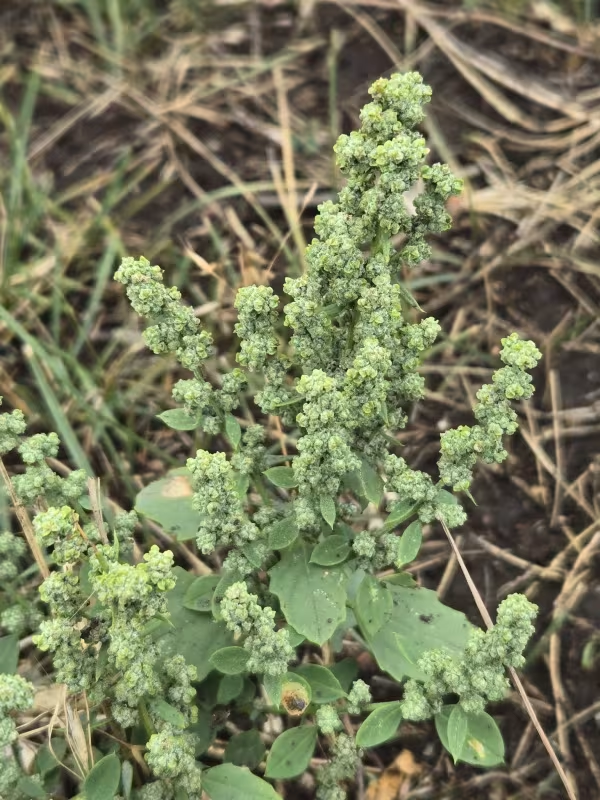
Description
Sowing dates
Sowing of Berlandier's goosefoot is typically carried out in early spring as soon as soil temperatures reach 8–10 degrees Celsius. The seeds possess good germination energy, allowing for rapid establishment under appropriate moisture conditions.
Seeds should be planted at a depth of 1–2 centimeters depending on the soil structure. Excessive planting depth should be avoided as it may delay emergence and lead to reduced overall plant vigor in the early stages of growth.
A row-planting method is highly recommended, with spacing between rows maintained at 45–60 centimeters. This structure provides optimal airflow and light penetration, reducing the risk of disease and competition between seedlings.
The seeding rate is usually calculated based on germination percentage, typically ranging from 2 to 4 kilograms per hectare. Proper plant spacing is essential to ensure that each individual plant has sufficient access to nutrients and soil moisture.
Early sowing takes advantage of residual winter soil moisture, which is critical for developing a robust root system capable of supporting the plant throughout the heat of the summer months.
Growing requirements
Berlandier's goosefoot belongs to the Amaranthaceae family and is recognized for its high adaptability to diverse ecological environments. It demonstrates significant resilience to drought and moderate temperature fluctuations.
While the plant thrives in fertile, well-drained soils, it exhibits a broad tolerance range, including loamy and slightly saline soils. Waterlogged conditions must be avoided, as stagnant water is conducive to root diseases and plant decay.
Exposure to full sunlight is essential for the healthy development of this crop. Shade conditions will significantly stunt plant growth and reduce the potential yield of seeds, which are the primary product of interest.
The ideal soil pH for this species falls between 6.0 and 7.5. In soils with high acidity, agricultural lime application is recommended to adjust the pH level and improve nutrient uptake efficiency.
The crop responds favorably to moderate nitrogen fertilization. However, excessive application should be avoided to prevent stem lodging and to ensure better overall quality of the harvested grain.
Yield
Yield potential of Berlandier's goosefoot varies depending on the intensity of agricultural practices and regional climate. With proper crop management, producers can achieve yields ranging from 1.5 to 2.5 tonnes per hectare.
Stable moisture levels during the flowering and grain-filling stages are critical for maximizing yield. Drought stress during these reproductive phases can lead to reduced seed weight and lower overall harvest quality.
The biological cycle of this crop is relatively long, so variety selection should be carefully aligned with the local growing season. Modern hybrids are being developed to improve productivity and uniform ripening.
Effective weed management and pest control are fundamental to ensuring that the plant can focus its energy on seed production. Maintaining high-quality field conditions generally leads to a significant increase in total output.
The purity of the harvested grain is a vital factor for marketability. Careful post-harvest cleaning and processing are required to meet quality standards and ensure the product remains free from contaminants.
Main diseases and pests
Common threats to Berlandier's goosefoot include various fungal diseases, such as downy mildew, which can proliferate in humid conditions. Maintaining proper spacing and using certified disease-free seed helps mitigate these risks.
Insect pests, such as leaf-miners and aphids, can cause significant damage, especially during the vegetative growth phase. Regular field scouting is necessary to detect infestations early and implement timely control measures.
Weed pressure is a major concern during the first month of development. Mechanical inter-row cultivation or the application of selective herbicides is often necessary to prevent weeds from outcompeting the crop for nutrients.
Viral diseases can be transmitted by insect vectors, making the control of secondary host plants along field margins an important aspect of a comprehensive integrated pest management strategy.
In cases of late-season high humidity, mold can develop on the inflorescences before harvest. Proper management of field moisture and timely harvesting are essential to minimize this risk.
Harvesting
Harvesting should begin when the seeds reach full physiological maturity, indicated by a change in seed coat color and grain moisture content decreasing to 14–16 percent. Avoid leaving the crop in the field too long to prevent seed shattering.
Direct combining is the standard method for harvesting. Combine settings must be carefully adjusted to minimize grain damage, as the seeds are relatively small and sensitive to high mechanical impact.
Post-harvest processing involves immediate cleaning to remove chaff and other vegetable matter. Removing these impurities is crucial to prevent the grain mass from overheating in storage bins.
The grain must be dried to a moisture content of 12% or lower to ensure stability during storage. Proper drying techniques ensure the longevity of the nutritional properties and prevent the growth of mold or bacteria.
Stored grain should be kept in cool, dry, and well-ventilated areas, protected from pests and rodents. With correct storage, Berlandier's goosefoot can be maintained for extended periods without quality loss.