
Pacific ninebark
Physocarpus capitatus
Description
Growing requirements
Pacific ninebark (Physocarpus capitatus) is a deciduous shrub that belongs to the rose family, Rosaceae. It is native to Western North America, primarily inhabiting moist forests, canyons, and riparian zones.
The plant thrives in moist, well-drained soils and demonstrates a high tolerance for varying light conditions, ranging from full sun to partial shade. It is well-adapted to cooler climates where moisture is consistently available throughout the growing season.
Agricultural practices for this species include regular irrigation, especially during the establishment phase. While it is quite hardy, mulching the root zone helps retain soil moisture and suppresses competing weeds in the surrounding area.
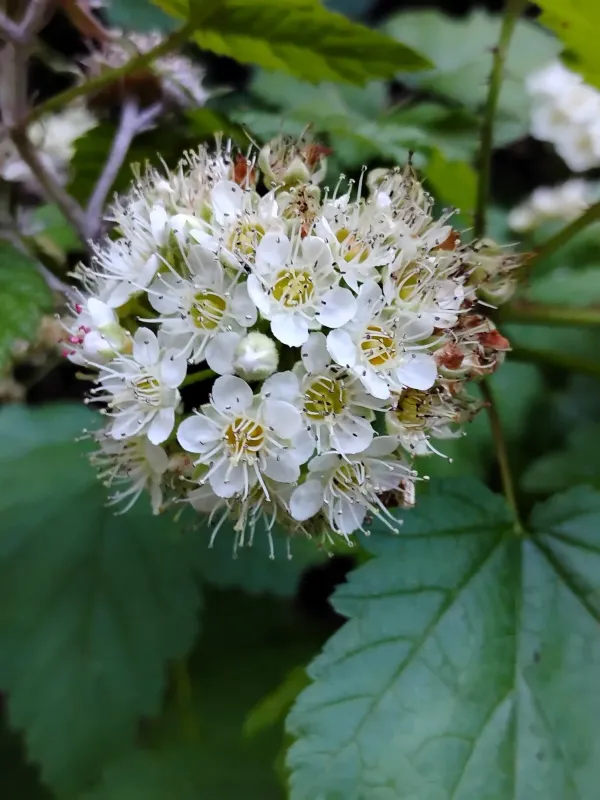
Botanically, the species is identified by its exfoliating bark, which peels in papery strips, and its small, white flowers clustered into round heads. The foliage is typically five-lobed and provides excellent visual texture in a landscape setting.
In terms of usage, Pacific ninebark is widely valued for its erosion control properties on slopes and stream banks. Additionally, it is a staple in native plant gardening and provides critical cover and food for local wildlife.
Main diseases and pests
Powdery mildew is the most common fungal disease affecting Pacific ninebark, particularly in humid or stagnant air environments where airflow is insufficient within the dense canopy.
Aphids are the primary insect pests that frequent the new growth of the shrubs. Managing aphid populations involves monitoring for infestations and, if necessary, applying horticultural oils or soaps.
Leaf spots may occur occasionally, usually during seasons with excessive rainfall. These are generally cosmetic but can affect the overall vigor of the plant if left unchecked over multiple seasons.
Maintenance pruning is essential to prevent the spread of diseases and to encourage healthy new growth. Removing dead or diseased wood annually significantly improves the plant's overall resilience.
Providing adequate spacing between individual plants is the best preventative strategy against most biological threats, as it ensures optimal light penetration and ventilation for the entire shrub.