
Dwarf ninebark
Physocarpus alternans
Description
Growing requirements
Dwarf ninebark (Physocarpus alternans) is a deciduous shrub belonging to the Rosaceae family. It is distinct for its compact size and rugged, mountainous natural history.
The plant is native to the western United States, primarily found in rocky outcrops and limestone cliffs in Nevada, Utah, and Arizona, where it thrives in harsh, nutrient-poor conditions.
Regarding soil requirements, it demands excellent drainage. It is highly drought-tolerant, making it an ideal candidate for xeriscaping or rock gardens where soil moisture fluctuates significantly.
Sunlight exposure is crucial for optimal growth. Providing full sun exposure ensures robust foliage development and a denser branching habit compared to specimens kept in shaded areas.
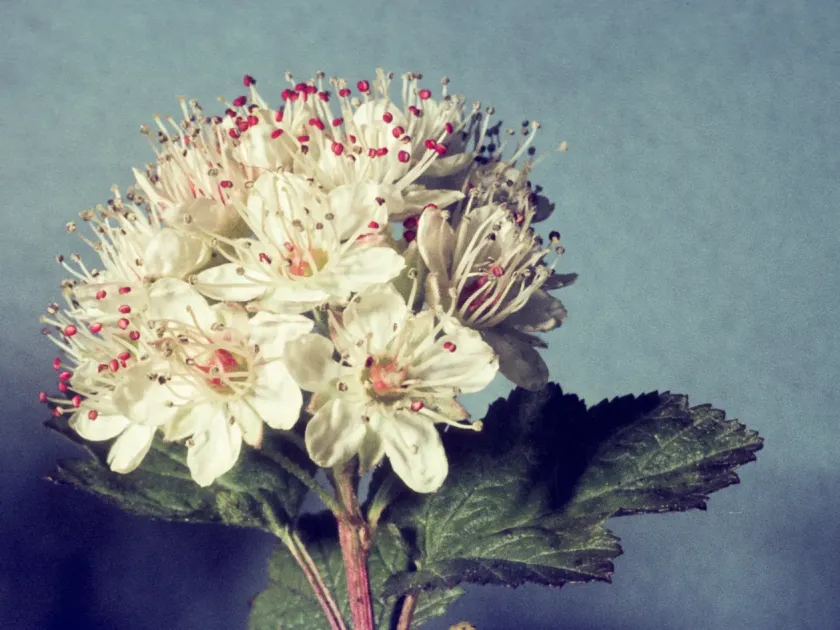
Its botanical morphology includes small, lobed leaves and white-to-pinkish flower clusters. The bark naturally peels as the plant matures, adding significant year-round texture to the landscape.
Main diseases and pests
The primary threats to Physocarpus alternans involve pathogens favored by stagnant moisture, particularly powdery mildew, which can coat leaves in white fungal spores.
Chlorosis is a common physiological disorder, usually manifesting as yellowing leaves due to iron deficiency caused by high pH levels in the surrounding growing medium.
Aphids are the most frequent insect pests, often colonizing the tender tips of new growth in the spring and potentially leading to stunted development if left unchecked.
Spider mites represent a secondary threat, particularly during hot, dry summer periods when the plant's natural defenses might be slightly weakened by environmental stress.
Integrated pest management, including regular inspection and the use of insecticidal soaps or systemic treatments, is recommended to keep the shrub healthy and vigorous.