
Hairy-stemmed philodendron
Philodendron squamiferum
Description
Growing requirements
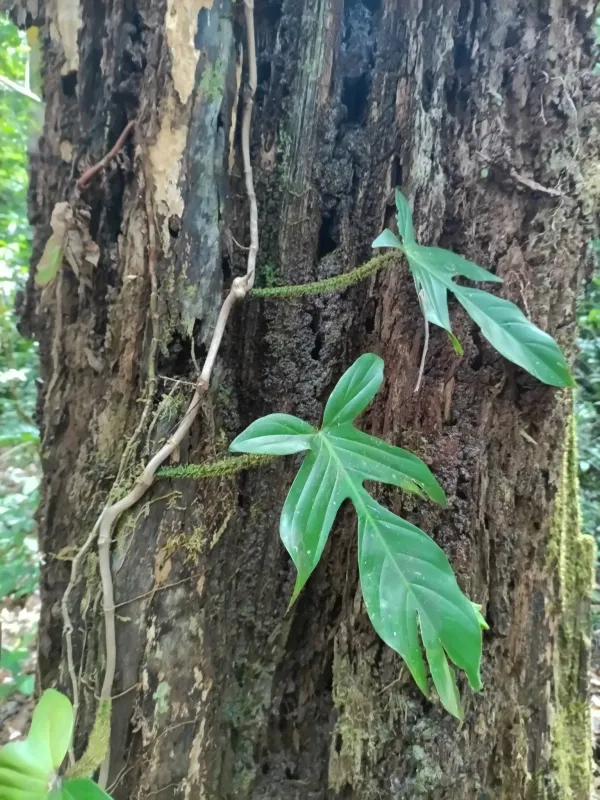
The Philodendron squamiferum is a distinctive climbing plant belonging to the Araceae family. Native to the tropical rainforests of French Guiana and Suriname, it is celebrated for its unique, fuzzy, red-bristled petioles that distinguish it from other members of the genus.
Cultivation of this species requires a warm and humid environment, mimicking its natural habitat. The ideal temperature range is between 20°C and 27°C. It is sensitive to sudden cold drops and should be kept away from air conditioning vents or cold winter drafts.
Lighting should be bright but filtered. While it can tolerate lower light levels, its growth will be stunted and the characteristic deep lobed shape of the leaves may become less pronounced. Direct sun must be avoided as it can cause significant leaf tissue damage.
Soil composition must prioritize drainage and aeration. A mixture containing orchid bark, peat moss, perlite, and charcoal is highly recommended. This prevents root rot while ensuring the roots have access to necessary oxygen levels throughout the growing season.
Proper physical support is essential for this species. Providing a moss pole allows the plant's aerial roots to anchor themselves, which provides structural stability and encourages the growth of larger, healthier, and more mature foliage characteristic of the species.
Main diseases and pests
The most common pests affecting Philodendron squamiferum are scale insects and spider mites. These pests thrive in dry indoor conditions and can quickly infest the complex, hairy petioles, making them difficult to eradicate without regular inspection.
Root rot is the most common disease, caused primarily by overwatering or poorly draining soil. When the substrate remains soggy for extended periods, the roots lose their ability to transport nutrients, leading to yellowing leaves and plant collapse.
Leaf spot diseases caused by various fungi can occur if the foliage remains wet for too long without adequate airflow. Improving ventilation in the growth area is a vital strategy for preventing such infections and maintaining the health of the leaves.
Regular maintenance, including wiping the leaves with a damp cloth, helps remove dust and creates an inhospitable environment for spider mites. If an infestation occurs, horticultural oils or insecticidal soaps can be applied as a targeted treatment.
Nutrient deficiency can make the plant more susceptible to opportunistic pathogens. A balanced, diluted liquid fertilizer applied during the active growing season helps maintain the plant's natural defenses against various environmental stressors and pests.