
Philodendron brandtianum
Philodendron brandtianum
Description
Growing requirements
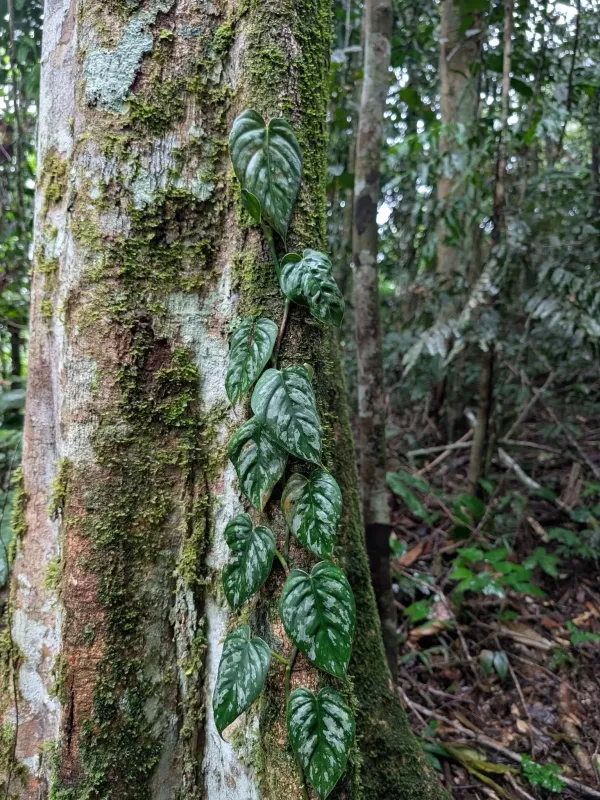
Philodendron brandtianum is a striking member of the Araceae family, known for its distinctive silver-grey variegation on heart-shaped leaves. Originating from the tropical rainforests of South America, this plant thrives in humid, shaded environments.
As an epiphytic vine, it requires support to grow vertically. In an agricultural or nursery setting, providing a moss pole or trellis mimics its natural habitat and encourages the development of larger, more mature leaves.
The plant demands bright, indirect light to maintain its vibrant leaf pattern. While it can adapt to lower light conditions, direct sunlight should be strictly avoided as it can cause bleaching and tissue damage to the foliage.
For optimal root development, the potting medium must be well-draining. A professional mix usually consists of equal parts peat moss, orchid bark, and perlite, which ensures the roots remain aerated while retaining sufficient moisture.
Temperature management is crucial; the plant prefers a range between 18°C and 27°C. It is highly sensitive to cold drafts and temperatures dropping below 15°C, which can cause metabolic slowdown and leaf drop.
Main diseases and pests
The most common agricultural threat to Philodendron brandtianum is root rot caused by stagnant water in the substrate. Over-watering is the primary cause of decline, preventing the roots from accessing necessary oxygen.
Spider mites are prevalent pests in environments with low humidity. They congregate on the undersides of leaves, causing yellow stippling and eventual leaf loss if not addressed with consistent misting or appropriate acaricides.
Mealybugs are another common nuisance, often found hidden in the nodes and leaf axils. They feed on plant sap and secrete a sticky substance known as honeydew, which can further attract secondary fungal growth.
Bacterial leaf spot can occur if leaves are frequently misted without adequate airflow, leading to dark, necrotic lesions. Proper spacing between individual plants is essential to reduce the risk of humidity-related pathogens.
Regular maintenance, including cleaning leaves with a damp cloth, serves as both a cultural practice for better photosynthesis and an early detection method for pest infestations.