
Mexican philodendron
Philodendron mexicanum
Description
Growing requirements
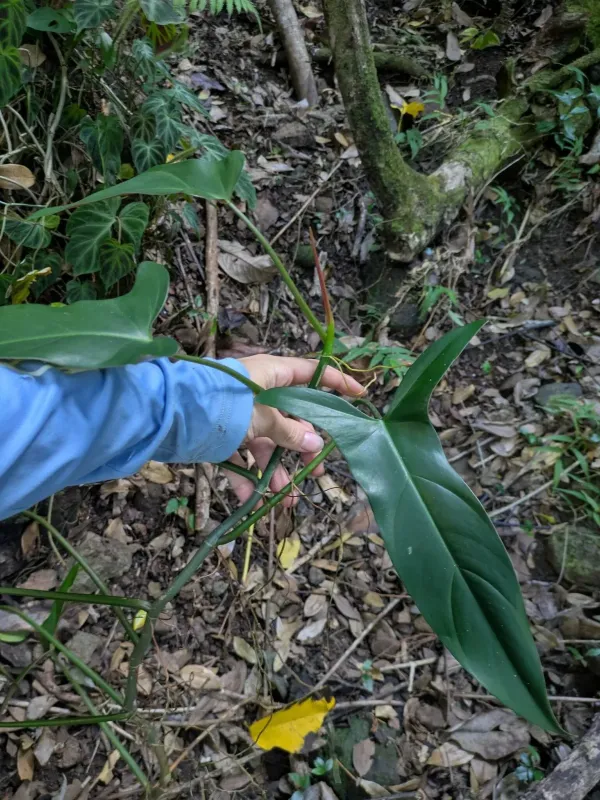
Philodendron mexicanum is a distinct epiphytic species belonging to the Araceae family. Native to the tropical rainforests of Mexico, this plant is highly valued for its striking, elongated, arrowhead-shaped leaves that often exhibit a deep, burgundy-colored underside.
To thrive, the plant requires bright, indirect sunlight. Exposure to harsh, direct sunlight can cause significant tissue damage and bleaching of the leaves. A stable temperature range between 20°C and 26°C is considered ideal for consistent vegetative growth.
The substrate must be well-draining and aerated to prevent root asphyxiation. A high-quality aroid mix, consisting of orchid bark, perlite, coco peat, and charcoal, effectively mimics the plant's natural epiphytic growing environment.
Humidity management is a critical component of the cultivation process. Maintaining a relative humidity level of 60% to 70% encourages healthy leaf production and prevents the foliage from becoming brittle or developing dry edges.
Watering should be performed only when the top layer of the soil has dried out slightly. Overwatering is the most common mistake, often leading to rapid root decay, especially during cooler winter months when metabolic activity slows down.
Main diseases and pests
Spider mites are the most prevalent pest affecting this crop, particularly in environments with low humidity. Infestations manifest as fine webbing and stippling on the leaves, requiring prompt application of neem oil or targeted miticides.
Root rot is a major threat caused by prolonged exposure to soggy soil conditions. It is essential to ensure that the drainage holes are not blocked and that the plant is never left sitting in stagnant water.
Mealybugs can be problematic, often clustering in the leaf axils where they remain protected. Regular physical inspection and wiping with alcohol-soaked swabs are effective manual methods for small-scale management.
Fungal leaf spot diseases can develop if air circulation is poor and leaves remain wet for extended periods. Pruning affected leaves and improving ventilation are key strategies to halt the spread of the pathogen.
Nutrient deficiencies may present as leaf chlorosis, indicating an imbalance in pH or a lack of essential micronutrients. Using a balanced, water-soluble fertilizer specifically formulated for aroids during the active growing season is recommended.