
Philodendron imbe
Philodendron imbe
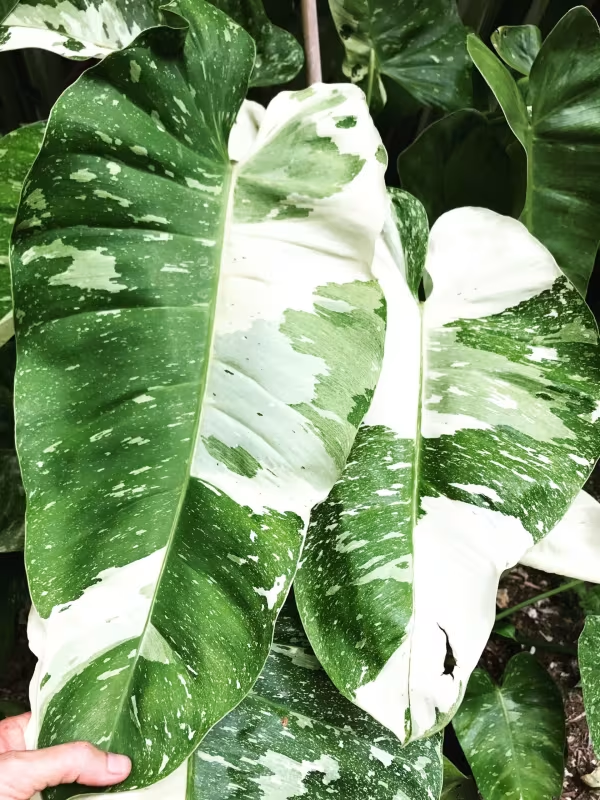
Description
Growing requirements
Philodendron imbe is an evergreen ornamental plant belonging to the Araceae family. Originating from the tropical rainforests of Brazil, it naturally grows as a climber, utilizing tall trees as support to reach the forest canopy.
The plant thrives in temperatures ranging between 20 and 25 degrees Celsius, requiring a consistent environment to maintain its growth cycles. High atmospheric humidity is a prerequisite for maintaining the turgor of its large, glossy leaves throughout the year.
In terms of soil, Philodendron imbe requires a well-draining, loose medium rich in organic matter. A mixture of peat, perlite, and bark is ideal for providing the necessary aeration to the root system, preventing the risk of waterlogging.
Bright, indirect light is essential for optimal development, as direct sunlight can cause leaf scorch. Providing a moss pole or wooden stake is recommended, as it supports the plant's natural climbing habit and encourages the growth of healthy adventitious roots.
Propagation is primarily achieved through stem cuttings containing nodes. These segments should be placed in moist sphagnum moss or a light rooting medium, ensuring high humidity and stable temperatures to stimulate rapid root development.
Main diseases and pests
Spider mites are a common threat, particularly in environments with low air humidity, and can cause significant damage to the leaf structure. Regular misting and leaf cleaning are effective preventive measures against these pests.
Scale insects frequently target the stems and leaf bases of Philodendron imbe, where they extract sap and leave behind sticky honeydew. Infestations should be managed immediately with appropriate systemic insecticides to prevent the decline of the plant.
Root rot, induced by waterlogged soil and poor drainage, remains the most frequent disease affecting this species. It is characterized by yellowing foliage and soft, mushy stems that indicate severe systemic infection.
Mealybugs can often hide in the tight junctions of leaves and petioles, making them difficult to detect early. If spotted, they should be removed mechanically or treated with specialized pest control agents to prevent further spread.
Leaf spot diseases, often caused by fungi or bacteria in stagnant air, can mar the ornamental value of the foliage. Maintaining good airflow around the plant and avoiding overhead irrigation during cooler periods are essential for long-term health.