
Brazilian Candles
Pavonia multiflora
Description
Growing requirements
Pavonia multiflora, commonly known as Brazilian Candles, is an attractive evergreen shrub belonging to the Malvaceae family. It originates from the tropical rainforests of Brazil, which defines its specific requirements for light and humidity.
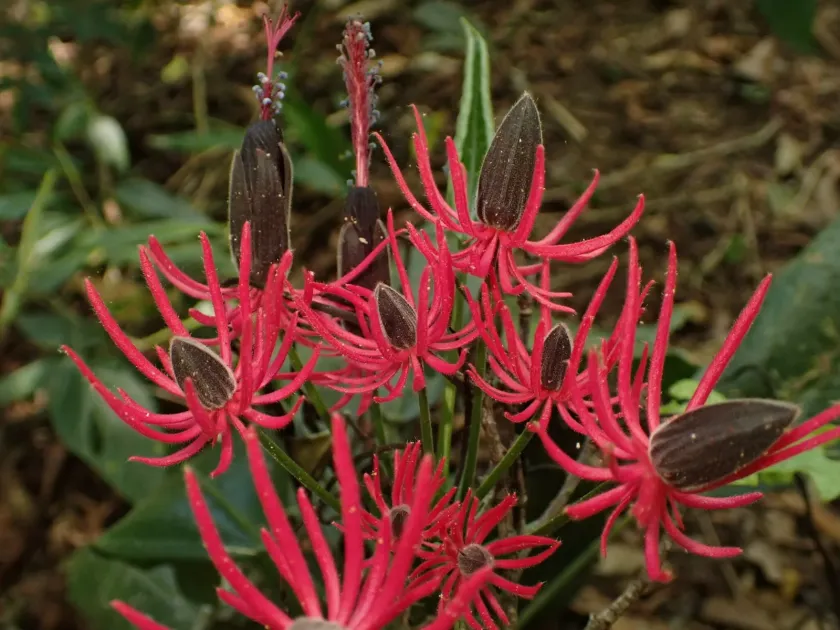
The plant is highly prized for its unique architectural appearance, characterized by deep red bracts and striking blue-violet petals. Its growth habit is upright, making it a perfect candidate for greenhouse production or sophisticated interior landscapes.
The cultivation of this species requires a well-draining, nutrient-rich potting medium. The soil should be slightly acidic to promote efficient nutrient uptake, while perlite or sand can be added to improve aeration.
It thrives in temperatures between 20°C and 25°C. During the active growing season, consistent moisture is critical, and the ambient humidity should be kept high to mimic its natural native environment.
Placement should be in a location with bright, indirect sunlight. Harsh, direct afternoon sun can cause leaf scorch, while extremely low light conditions will prevent the plant from producing its signature floral display.
Main diseases and pests
Spider mites are the most common pest problem for Pavonia multiflora, particularly in dry indoor environments where the air lacks the necessary moisture for the plant's health.
Whiteflies and mealybugs may also infest the plant, potentially causing stunting and yellowing of the leaves if left uncontrolled during the growing season.
Root rot is a significant risk if the soil remains waterlogged. Proper drainage management is the primary defense against fungal diseases that attack the root system.
Regular inspection of the foliage, especially the underside of the leaves, is necessary to detect pests early. Using horticultural soaps or neem oil is usually effective for mild infestations.
To ensure long-term health, growers must maintain good air circulation, which reduces the incidence of fungal pathogens and discourages pest colonization.