
Pavonia cancellata
Pavonia cancellata
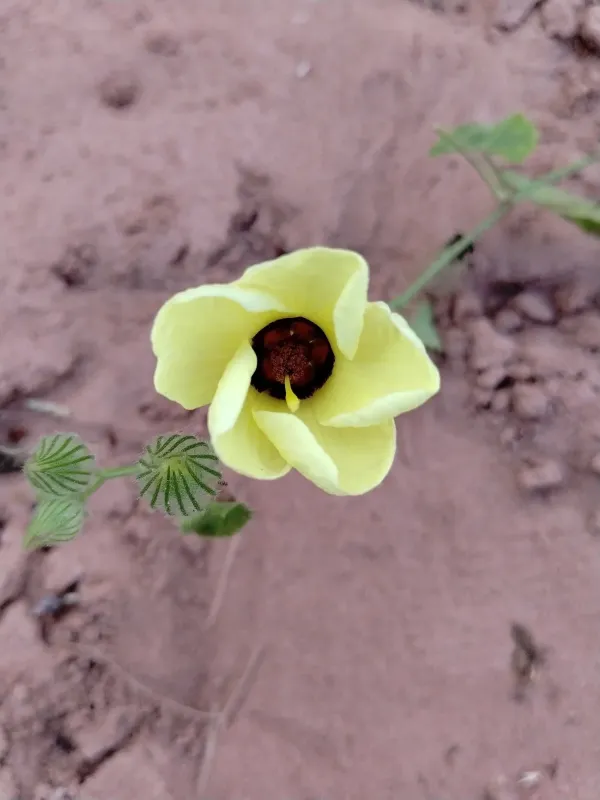
Description
Sowing dates
Pavonia cancellata is a perennial herbaceous plant belonging to the Malvaceae family, known for its potential as a source of natural fiber. The sowing process requires careful soil preparation, as the seeds are sensitive to cold environments and need a stable thermal regime to germinate effectively.
The optimal time for sowing is during late spring when soil temperatures consistently stay above 15 degrees Celsius. Pre-sowing treatment of seeds is recommended to enhance vigor and ensure a high percentage of germination across the cultivated area.
Cultivation is typically performed in wide rows, which facilitates subsequent mechanical weeding and soil aeration. The depth of planting should be maintained between 2 to 4 centimeters, depending on the soil moisture and texture, to provide the best environment for seedling emergence.
Proper plant density is critical for the production of high-quality fiber. Overcrowding can lead to poor air circulation and plant lodging, while excessively sparse planting fails to utilize the land potential efficiently, requiring careful calculation of seeding rates.
Post-sowing rolling of the field is a standard agronomic practice to improve soil-to-seed contact. This step is particularly important in drier climates, where moisture conservation is vital for the successful establishment of the crop during its early vegetative stage.
Growing requirements
Originating from the tropical and subtropical regions of South America, Pavonia cancellata thrives in warm climates with plenty of sunlight. It requires a long photoperiod and constant warmth to maximize its biomass production throughout the growing season.
While the plant shows some tolerance to drought, consistent moisture is necessary to achieve optimal fiber yield. Irrigation management should focus on avoiding waterlogging, as the root system of this species is highly susceptible to decay in saturated, heavy soils.
The ideal soil for this crop is well-drained, fertile, and slightly acidic or neutral. Soils rich in organic matter promote healthy stem development. In poorer soils, strategic application of nitrogen-based fertilizers can significantly boost plant growth and fiber development.
Temperature fluctuations should be minimized. The plant reacts poorly to cold winds and temperatures dropping below 10 degrees Celsius, which can stunt the growth and delay the harvest cycle. Protective measures against wind exposure may be necessary in open fields.
Proper site selection is essential, favoring locations with stable climate patterns. Because it is a heat-loving plant, cultivation in regions with short, unpredictable summers may require specialized greenhouse or tunnel techniques for initial development.
Main diseases and pests
The crop is subject to several threats, primarily from foliage-eating insects that can significantly reduce the photosynthetic capacity of the plants. Regular monitoring is essential to detect early infestations before they reach levels that damage the fiber yield.
Fungal diseases are a persistent challenge, especially during periods of high humidity. Common issues include various leaf spots and stem rots which thrive in thick, poorly ventilated canopies. Effective crop rotation is the primary preventative measure.
Management of weed competition is vital, as weeds often act as hosts for various pathogens and pests that affect the Malvaceae family. Mechanical weeding during the early stages of growth is an effective way to keep the fields clean and healthy.
Biological control methods are increasingly preferred over chemical interventions to maintain the ecological balance of the farmland. When chemicals are necessary, targeted applications are recommended to minimize the impact on local pollinators and beneficial soil organisms.
- Implement strict crop rotation schedules.
- Maintain proper row spacing to ensure adequate air circulation.
- Monitor for common lepidopteran pests and beetles.
- Ensure balanced fertilization to prevent weak growth.