
Cretan pellitory
Parietaria cretica
Description
Growing requirements
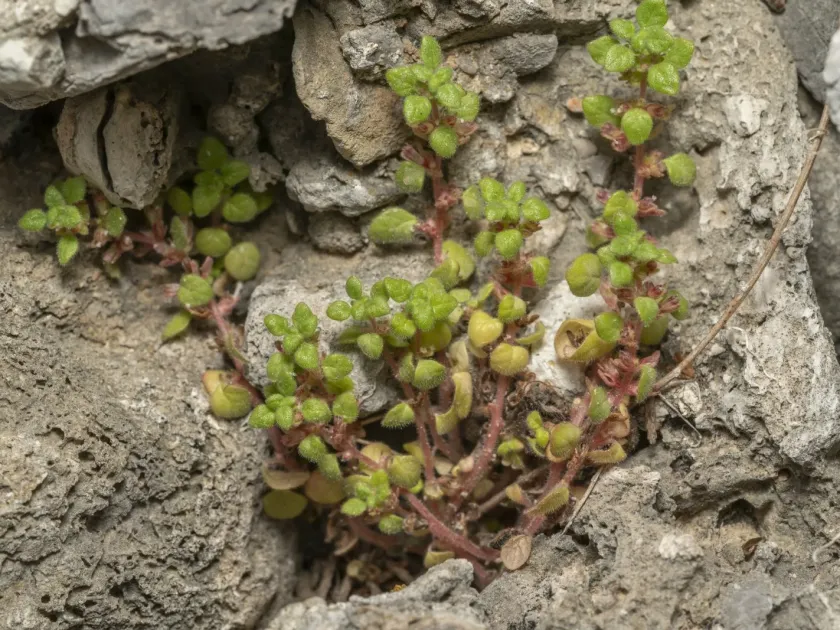
Cretan pellitory (Parietaria cretica) is an annual herbaceous plant belonging to the Urticaceae family. It is native to the Mediterranean region, typically found in rocky habitats, stone walls, and disturbed ground where it demonstrates remarkable ability to survive in minimal soil conditions.
The plant is characterized by its branching stems, which range from 10 to 30 centimeters in height. Its foliage consists of small, egg-shaped leaves covered in fine hairs, an evolutionary adaptation that helps the plant retain moisture in arid environments.
It thrives in Mediterranean climates characterized by mild, wet winters and hot, dry summers. The plant is essentially a winter annual, completing its growth cycle during the cooler, wetter months before the summer heat arrives.
The soil requirements for Cretan pellitory are quite modest. It performs well in rocky, calcareous, or nutrient-poor substrates, preferring a neutral to slightly alkaline pH. Its root system is shallow, allowing it to colonize cracks in rocks where other vegetation would struggle to establish.
In an agricultural context, this plant is generally considered a weed in gardens and field margins. However, due to its resilience, it is occasionally studied for its potential in erosion control on rocky embankments or as part of local ecological restoration projects in its native range.
Main diseases and pests
Like many members of the nettle family, Cretan pellitory is susceptible to powdery mildew when grown in dense clusters with poor air circulation, especially during high-humidity periods.
Pests such as aphids and spider mites can infest the foliage, particularly during the transition between the wet growth season and the onset of dry summer conditions, weakening the plant.
The plant is not highly competitive against vigorous crop species. In managed fields, it is easily suppressed by standard crop rotations and timely mechanical cultivation of the soil.
Excessive nitrogen fertilization in agricultural soils can lead to rapid, succulent growth that makes the plant more vulnerable to insect attacks and stem collapse.
Management in agricultural settings usually involves basic weeding strategies; because the plant is an annual, preventing it from going to seed is the most effective method of control.