
Variegated broomrape
Orobanche variegata Wallr.
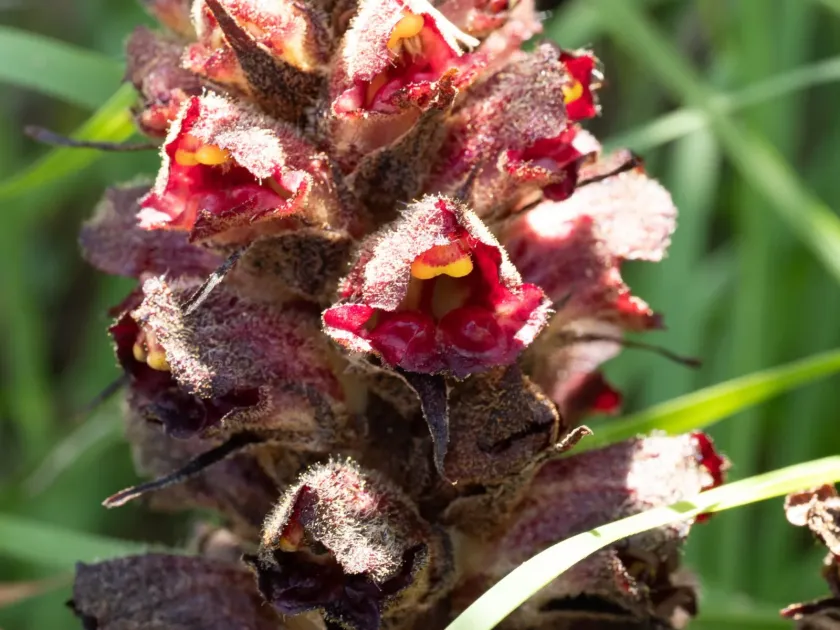
Description
Growing requirements
Orobanche variegata, commonly known as Variegated broomrape, is a parasitic plant within the Orobanchaceae family. As an obligate parasite, it lacks chlorophyll and cannot perform photosynthesis, which forces it to derive all metabolic requirements from the host plant's root system.
The morphology of this plant is characterized by a fleshy, unbranched stem emerging from the soil. The vegetative growth occurs entirely underground, where the parasite connects to the host's root system via specialized haustoria to extract minerals and photoassimilates.
Its natural range includes various temperate regions, often aligning with the cultivation areas of susceptible host plants. The survival of its seeds depends heavily on the presence of chemical triggers released by host roots, which initiate the germination process in the soil.
Regarding environmental conditions, this species thrives in well-drained, warm soils where host root exudates can easily reach the parasite seeds. Humidity fluctuations play a critical role in determining the success of host attachment.
In terms of agricultural significance, Variegated broomrape is categorized as a destructive weed. It acts as a significant drain on host energy resources, often leading to severe biomass reduction and failure of the crop yield in heavily infested regions.
Main diseases and pests
The primary threat posed by this parasite is the physical and physiological competition with the host plant. By redirecting the flow of nutrients from the host's roots, it leads to wilting, stunted growth, and a substantial decrease in the harvest quality.
Secondary infections often exacerbate the damage caused by the broomrape. When roots are penetrated by the haustoria, they become more susceptible to fungal pathogens and root-rot complexes, which significantly compromise the crop's health.
Effective management strategies center on integrated pest management (IPM), starting with crop rotation involving non-host species. This strategy helps to exhaust the dormant seed bank of the parasite within the soil profile.
Biological control agents and the use of resistant crop varieties remain the most sustainable approaches to mitigate the damage. These methods help maintain crop productivity even in areas where the parasite is present.
Strict sanitation measures must be enforced to prevent the spread of broomrape seeds to non-infested fields. Ensuring the use of certified, clean seeds and cleaning farm machinery remains vital to limiting the expansion of this parasitic weed.