
Mutel's broomrape
Orobanche mutelii F. W. Schultz
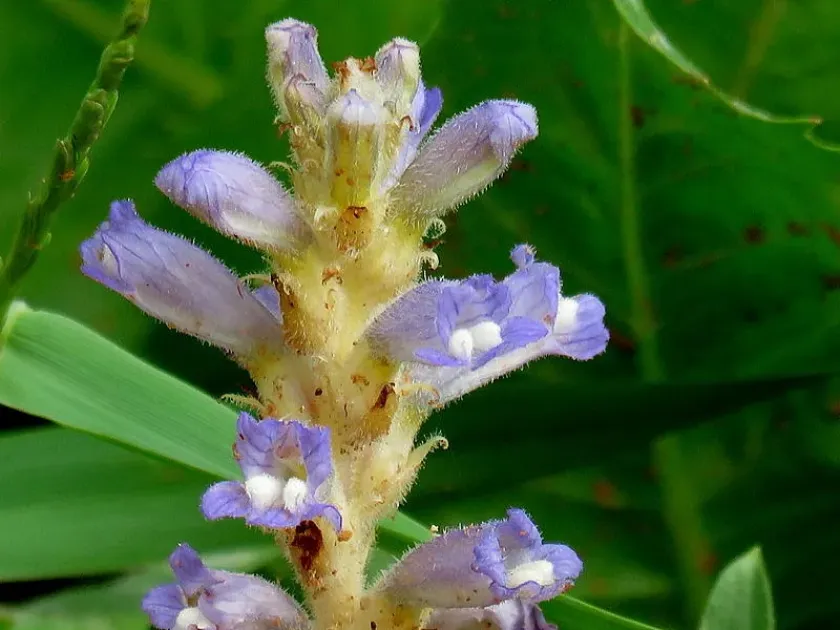
Description
Growing requirements
Mutel's broomrape (Orobanche mutelii) is an obligate root parasite belonging to the Orobanchaceae family. It is a non-photosynthetic plant that lacks chlorophyll, making it entirely dependent on host plants for survival.
The life cycle of this parasite is closely tied to the root systems of various herbaceous plants. It attaches to the host's roots using haustoria, which penetrate the tissue to extract vital water and nutrients necessary for the broomrape's development.
The native range of this species is centered in the Mediterranean region and parts of the Middle East. It thrives in arid and semi-arid climates, typically inhabiting sandy or loamy soils that provide optimal conditions for host plant root development.
Environmental requirements include specific soil temperatures that trigger the germination of parasitic seeds in response to chemical signals emitted by host roots. This synchronization ensures that the broomrape attaches to a suitable host immediately upon emergence.
In agriculture, this plant is considered a serious pest rather than a crop. Its presence in agricultural fields often indicates a need for better weed control management, as it can significantly reduce the vitality and yield of cultivated plants.
Main diseases and pests
The primary threat posed by Orobanche mutelii is the direct drain on the host plant's energy resources. This infestation leads to reduced biomass, stunted growth, and in severe cases, the death of the crop.
Economic losses are compounded by the difficulty of managing the parasite once it has established in the soil. The microscopic seeds can persist in the soil for several years, making eradication difficult.
The parasite also affects the quality of the harvest. Fruits or grains from infested plants are often undersized or have a lower nutritional profile, making them unsuitable for market standards.
Management strategies involve a combination of biological and agricultural practices. Farmers are advised to utilize trap crops that induce "suicidal germination" of broomrape seeds without providing a suitable host for attachment.
Strict quarantine measures are essential to prevent the spread of seeds via contaminated machinery or agricultural produce. Biological control agents, including specific fungi and insects, are also being studied to mitigate the impact of this parasitic weed.