
Amethyst broomrape
Orobanche amethystea Thuill.
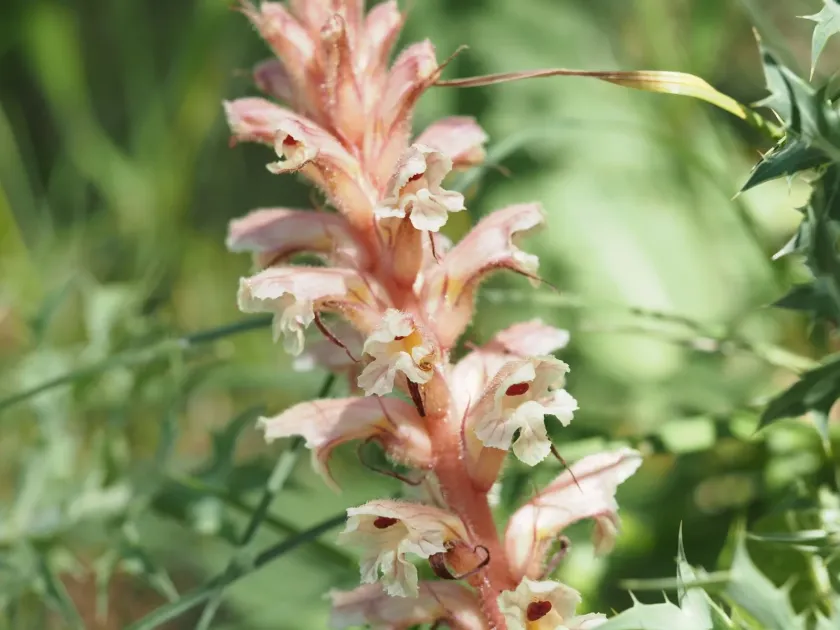
Description
Growing requirements
Amethyst broomrape Orobanche amethystea is an obligate holoparasitic plant belonging to the Orobanchaceae family. Being devoid of chlorophyll, it is entirely dependent on its host plant for water, minerals, and carbohydrates, which it draws through specialized organs called haustoria.
The life cycle of this plant is highly adapted to its parasitic lifestyle. Its microscopic seeds remain viable in the soil for several years and will only germinate when they detect chemical signals released by the roots of a compatible host plant in the immediate vicinity.
The natural range of the species extends across parts of Europe and the Mediterranean basin. It thrives in sunny, warm environments with well-drained soils that support the growth of its primary hosts, typically leguminous or certain asteraceous plant species.
Botanically, it features a stout, erect stem covered with scale-like leaves. Its defining feature is the inflorescence, which consists of amethyst-colored or lavender-tinted flowers, making it identifiable among other species of the Orobanche genus.
From an agricultural standpoint, it acts as a debilitating pest. By draining the vital resources of the host crop, it causes stunted growth, reduced biomass, and a significant decline in the final yield quality for the farmer.
Main diseases and pests
Crop rotation remains the primary defense against Amethyst broomrape. Planting non-host crops for several years reduces the number of viable seeds in the soil seed bank by triggering suicidal germination.
Developing and utilizing crop varieties that are resistant to parasitic attachment is a critical component of integrated pest management. Such plants are bred to be less responsive to the stimulant signals that trigger the broomrape germination.
Mechanical control involves the removal of the parasitic spikes before they reach the stage of seed dispersal. While labor-intensive, it is an effective method to prevent re-infestation of the plot.
Chemical control strategies often involve the use of herbicides applied to the soil or to specifically resistant crops. However, this approach requires careful management to avoid damage to the host plant or the surrounding soil ecosystem.
Future agricultural practices are exploring the use of biological control agents, such as specific fungi or insects that feed on the broomrape, providing a sustainable alternative to chemical interventions.