
Hemp broomrape
Orobanche ramosa L.
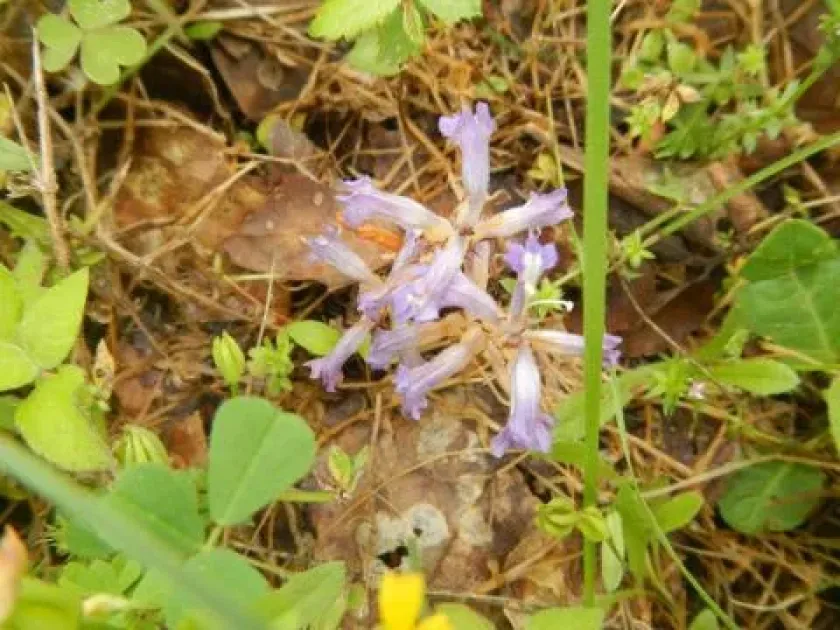
Description
Growing requirements
Hemp broomrape is an obligate root parasite belonging to the Orobanchaceae family. As a holoparasite, it lacks chlorophyll and cannot perform photosynthesis, relying entirely on a host plant for its nutritional requirements.
The species is native to Southern Europe and the Mediterranean basin, but it has expanded its range across many agricultural regions worldwide. It thrives in warm, temperate climates where its hosts, such as tomatoes, tobacco, and hemp, are cultivated.
The germination of its seeds is strictly dependent on the presence of chemical signals, specifically strigolactones, released by the roots of a compatible host plant. This evolutionary adaptation ensures the parasite only germinates when a food source is nearby.
In terms of soil requirements, it prefers well-drained, porous soils that allow for good aeration. The parasite is highly sensitive to the presence of moisture and warmth, which trigger its rapid underground development phase before emerging above ground.
Agricultural management is complex and focuses on long-term prevention. This includes strict sanitation of equipment, using certified parasite-free seeds, and the implementation of trap crops that trigger seed germination without allowing the parasite to attach.
Main diseases and pests
The primary threat of Orobanche ramosa is the complete drainage of the host's resources. The parasite utilizes specialized organs called haustoria to penetrate the host's vascular system, directly siphoning off sugars, water, and essential minerals.
Each individual plant can produce tens of thousands of dust-like seeds, which are highly resistant to environmental stress. These seeds remain viable in the soil for over a decade, making complete eradication extremely difficult once a field is infested.
Management often involves the use of herbicide treatments, particularly those belonging to the imidazolinone group, applied to crops bred for tolerance. However, reliance on chemical control alone is often insufficient due to the parasite's hidden growth stage.
Key control strategies include:
- integrated crop management;
- rotation with non-host crops for at least 5-7 years;
- manual removal of emerging flowering stalks before seed set;
- strict quarantine measures for imported soil and seed batches.
Beyond chemicals, researchers are investigating the use of bio-control agents such as fungal pathogens and specific insect species that target the broomrape flower and seed pods to reduce the overall seed bank in the soil.