
Dyer's onosma
Onosma tinctoria
Description
Growing requirements
Dyer's onosma (lat. Onosma tinctoria) is a herbaceous perennial plant belonging to the Boraginaceae family. It is native to the Mediterranean region, where it thrives in rocky, well-drained limestone environments, demonstrating high resilience to arid conditions.
Botanically, the plant is characterized by its stiff, bristly hairs covering the leaves and stems, which help minimize moisture loss. The taproot system is deep and well-developed, allowing the plant to anchor itself firmly and access moisture from deeper soil layers during intense summer heat.
For agricultural production, onosma requires sites with excellent sunlight exposure and light, porous soils. It is critical to maintain low moisture levels in the root zone, as the plant is highly susceptible to root rot if soil drainage is inadequate or water stagnation occurs.
The climate requirements emphasize warmth and moderate winter temperatures. While it can handle periods of drought, it should be protected from excessive humidity and waterlogging, which are the primary limiting factors for successful growth in northern climates.
Cultural management involves careful weed control during the seedling phase to ensure the plants establish without competition. Once mature, Dyer's onosma is a hardy plant that requires little specialized care, making it a potentially low-maintenance industrial crop.
Harvesting
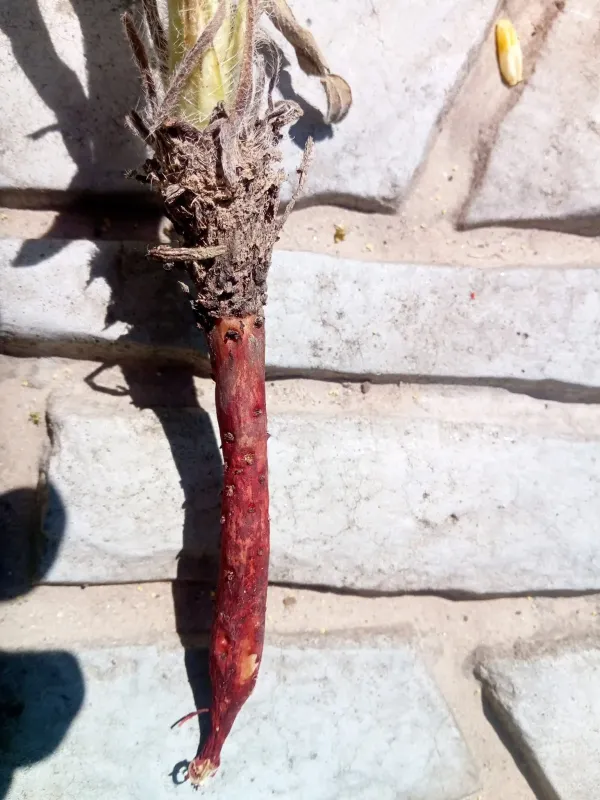
The primary economic value of Onosma tinctoria is found in its roots, which are a traditional source of natural red pigments, particularly alkannin-like substances. These dyes have found historical and modern applications in the textile and cosmetic industries.
Harvesting usually occurs after the plant has reached a suitable age, typically two to three years of growth, to ensure the root system has accumulated a sufficient concentration of pigment. The roots are carefully extracted from the soil, thoroughly cleaned of debris, and dried under moderate conditions to prevent the degradation of the light-sensitive dye components.