
Alkanet
Onosma echioides
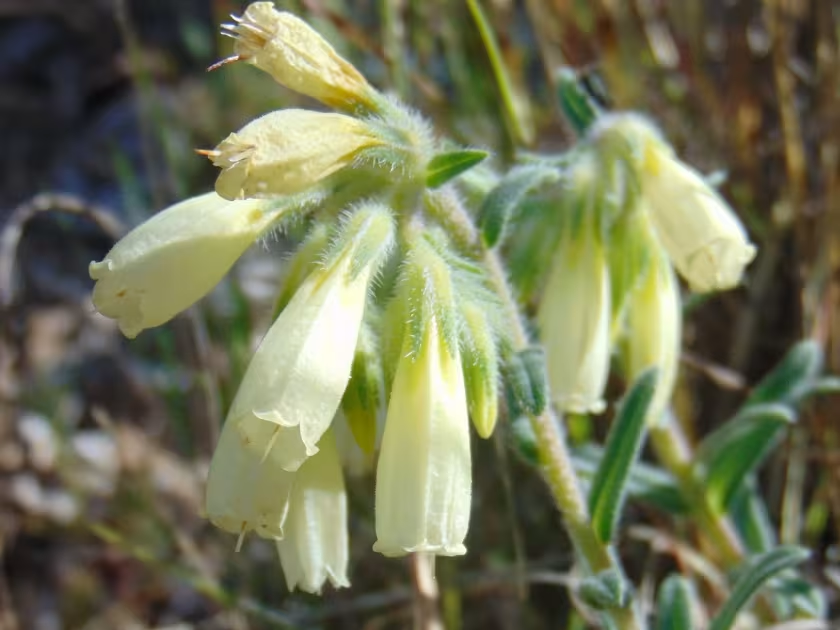
Description
Sowing dates
Onosma echioides, a member of the Boraginaceae family, is a perennial plant often propagated by seeds. Sowing is typically performed in late autumn or early spring to allow for natural stratification, which improves germination rates significantly for this species.
The soil must be well-drained, sandy, or rocky to mimic the plant's natural habitat. Seeds are sown at a shallow depth of 1-2 centimeters in rows spaced 30 to 45 centimeters apart, providing enough space for the plant's basal rosette to develop fully during the first year.
Due to the slow initial growth of the seedlings, precision in site preparation is critical. Weeding must be performed manually or mechanically at early stages, as the young plants are easily suppressed by faster-growing weeds and invasive grass species.
In industrial settings, seed quality is tested for purity and vigor before planting. Proper contact between the seed and the soil is maintained by light rolling after the sowing process, ensuring optimal moisture retention for the germination period.
Vegetative propagation via cuttings is sometimes utilized for specific selections or smaller scale cultivation. However, the direct seeding method remains the most cost-effective approach for establishing large-scale plantations intended for root production.
Growing requirements
As a xerophytic plant, Onosma echioides thrives in environments with high light intensity. Exposure to full sun is essential for the plant to accumulate the secondary metabolites, particularly naphthoquinones, which are responsible for its medicinal and dyeing properties.
Drainage is the most important soil requirement. This plant is highly sensitive to root rot triggered by stagnant water. Sandy loams or gravelly soils with an alkaline to neutral pH are ideal for ensuring healthy root development throughout the plant's lifecycle.
The plant is highly drought-tolerant, adapted to Mediterranean-like climatic conditions. Irrigation is generally unnecessary after the establishment phase, except during severe, prolonged droughts that might affect the development of the taproot.
Regarding fertilization, the crop prefers low-nutrient conditions. Excessive nitrogen application should be avoided as it promotes leafy growth rather than the desired root mass. Balanced phosphate and potassium applications in the early years can support stronger root formation.
The thermal requirements for active vegetation are moderate, ranging from 18 to 25 degrees Celsius. It is relatively frost-hardy, although it requires protection from icy conditions in areas with harsh winters, specifically to avoid damage to the root crown.
Yield
The harvest yield of Onosma echioides is primarily measured by the dry root mass, which is the commercially valuable part of the plant. A harvest is typically viable starting from the third or fourth year when the root system has reached sufficient maturity.
Yields in field conditions generally range from 150 to 300 kilograms of dried root per hectare. Productivity is highly dependent on soil texture, planting density, and the implementation of proper weed management techniques during the plant's initial development.
The quality of the yield is defined by the concentration of red pigment found in the root's cortex. Proper management ensures that the roots develop straight and robust, which allows for easier processing and a higher market value for the final product.
While seed production is possible, it is rarely the focus of the cultivation. The primary objective is maximizing the root biomass, which requires patience as the plant grows slowly during the first year of its life cycle.
Advanced harvesting equipment can significantly improve the volume of yield per hectare by minimizing losses during extraction from the soil. Precision harvesting is vital to ensure that the intact roots are collected without unnecessary breakage.
Main diseases and pests
Root rot is the most significant pathological threat to Onosma echioides, especially in clay-rich or poorly drained soils. Prevention through site selection and soil amendment is more effective than any chemical treatment after the infection has started.
Common agricultural pests like wireworms and various soil-dwelling larvae can severely damage the taproot. Integrated pest management, including crop rotation and the use of eco-friendly biological controls, is recommended to mitigate these risks effectively.
Fungal leaf diseases such as powdery mildew may occur in high-humidity or poorly ventilated conditions. Ensuring proper spacing between plants and keeping the foliage dry are the primary preventative measures for maintaining crop health.
Weeds are the primary competitor in the early growth stages of the crop. Manual weeding and mulching are essential to keep the plantation free from invasive plants that compete for sunlight and soil nutrients during the slow establishment phase.
Small mammals like voles can pose a threat by feeding on the roots and the root crown during the winter season. Protective measures, such as fencing or habitat management around the plantation, are necessary to prevent localized damage to the crop.
Harvesting
The harvest occurs in autumn once the plants have entered dormancy. During this period, the concentration of active chemical compounds in the roots reaches its peak, which is critical for meeting pharmaceutical or industrial quality standards.
Extraction involves loosening the soil and lifting the roots carefully. Mechanized digging tools are used to ensure the roots are pulled out without being snapped, as damaged roots lose moisture and value during the cleaning and drying processes.
Post-harvest, the roots must be cleaned gently in running water to remove soil particles. It is imperative to avoid rough scrubbing or peeling, as the biological pigments are concentrated in the outer bark of the root system.
Drying is a critical step performed in temperature-controlled environments (below 50 degrees Celsius). Excessive heat can degrade the naphthoquinones, so the drying process is carefully monitored to preserve the medicinal and color-related components.
After drying, the roots are stored in airtight, dark containers in cool conditions. Protection from light is essential, as UV rays can lead to the oxidation of pigments and the loss of biological activity, reducing the shelf life of the raw material.