
Onosma aleppica
Onosma aleppica
Description
Sowing dates
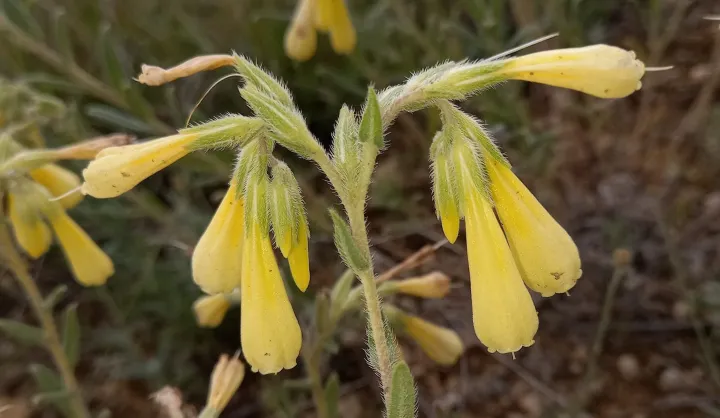
Onosma aleppica is a perennial herb belonging to the Boraginaceae family. It is recognized for its adaptation to arid environments, characterized by a deep taproot system and distinctive hair coverage on its foliage.
Seeding is typically scheduled for late autumn or early spring. Due to the hard seed coat, pre-sowing stratification is highly recommended to ensure uniform and efficient germination rates across the plantation.
Seeds should be sown at a shallow depth of 1 to 2 cm. Maintaining a row spacing of 45 to 60 cm is essential, as this allows sufficient space for the plant to develop its basal rosette during the first year of vegetation.
Germination usually occurs within 2 to 3 weeks provided there is adequate soil moisture and soil temperatures remain moderate. Slow initial growth requires meticulous weed management to prevent competition.
Proper density of the crop is crucial for yield. Overcrowding can lead to poor air circulation, while sparse planting fails to utilize the soil potential effectively for root development.
Growing requirements
Onosma aleppica thrives in open, sunny locations with direct sunlight exposure. Shaded areas are detrimental to the plant, causing etiolation and a significant reduction in the quality of the harvested roots.
The ideal soil is loose, well-drained, and sandy or rocky. The species is highly sensitive to waterlogging, as excessive moisture in the root zone quickly triggers decay and root rot diseases.
The plant demonstrates excellent heat tolerance and can survive prolonged drought conditions. Its morphology is perfectly adapted to climates with irregular rainfall, making it a stable crop in arid zones.
Soil reaction should ideally be neutral or slightly alkaline. Excessive nitrogen fertilization should be avoided, as it promotes unnecessary vegetative growth and may lower the concentration of secondary metabolites in the roots.
Regular inter-row cultivation is necessary to maintain soil aeration, especially after heavy rains, to ensure that the root system has the oxygen required for healthy expansion.
Yield
The primary economic value of Onosma aleppica lies in its roots, which are a rich source of alkanin and shikonin pigments. These compounds are highly valued for their antimicrobial and healing properties.
Commercial plantations are typically harvested after 3 to 4 years. This duration allows the roots to grow to an optimal size and reach peak concentrations of the valuable chemical constituents.
Yield efficiency is determined by soil preparation and careful harvesting techniques. Providing adequate drainage and preventing soil compaction during the growth phase are the main drivers of productivity.
Proper crop rotation is necessary to maintain yield consistency. Planting Onosma on land previously occupied by related Boraginaceae species should be avoided to prevent pathogen accumulation.
Market demand for organic plant-based dyes and medicinal compounds makes Onosma aleppica a high-value niche crop for specialized agricultural producers.
Main diseases and pests
Root rot caused by fungal pathogens is the most significant threat to the culture. Poor drainage and water-saturated soil conditions are the primary catalysts for these outbreaks.
Aphids and spider mites are common pests that target the foliage during hot, dry spells. Infestations should be managed early to prevent plant stress and the spread of potential viral infections.
Weeds are the greatest threat during the establishment phase. Perennial weeds with aggressive root systems can easily outcompete the young Onosma plants for nutrients.
Integrated pest management should focus on cultural practices such as spacing and drainage rather than heavy chemical applications, especially since the roots are used for medical purposes.
Regular monitoring for symptoms of wilting or discoloration is essential to detect early signs of stress and prevent the loss of entire plantation sections.
Harvesting
Harvesting is performed in late autumn during the plant's dormancy phase. This timing ensures that the nutrient and pigment content in the roots is at its maximum for industrial processing.
Mechanical harvesting requires tools that can reach depths of 30 to 40 cm without breaking the delicate roots. Clean extraction is vital, as root damage can lead to pigment oxidation.
Post-harvest, the roots must be thoroughly washed to remove soil. This step must be performed quickly, followed by rapid drying to prevent fermentation or mold development.
Drying should take place in well-ventilated units at temperatures not exceeding 45 degrees Celsius. Overheating can damage the complex molecules responsible for the plant's commercial value.
Finished raw material should be stored in cool, dry, and dark environments to protect the pigments from light-induced degradation and humidity fluctuations.