
Onosma echinata
Onosma echinata
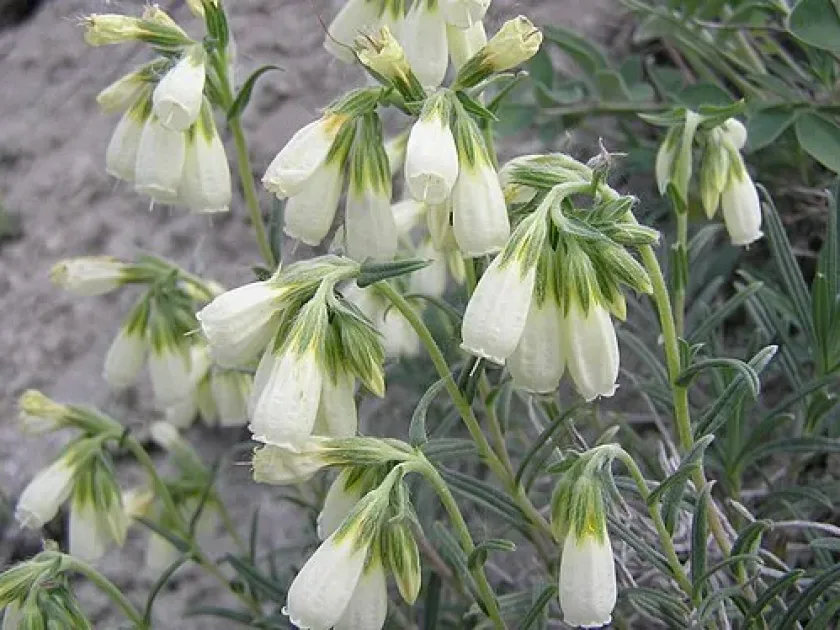
Description
Sowing dates
Onosma echinata is a herbaceous perennial plant belonging to the Boraginaceae family. It is adapted to various environmental conditions and often thrives in arid habitats.
The sowing process is typically recommended for early spring, allowing the seeds to establish before the onset of the heat of summer.
Seeds should be planted in well-prepared, loose soil to facilitate proper root development and early seedling emergence.
Precise depth control during sowing is essential; seeds should be covered with only a thin layer of soil to ensure access to sufficient moisture for germination.
Maintaining a weed-free environment during the first phase of growth is critical for this species, as it is relatively slow to establish in its initial year.
Growing requirements
This plant is a heliophyte, meaning it requires full sun exposure to flourish and maintain its metabolic processes at optimal levels.
Onosma echinata thrives in well-drained, porous soils, such as gravelly or sandy substrates, where water does not linger near the root zone.
It displays remarkable drought tolerance, which makes it an ideal candidate for cultivation in regions characterized by low precipitation and poor soil quality.
The plant prefers neutral to slightly alkaline soil pH and does not perform well in heavy, clay-rich, or compacted soil structures.
Minimal fertilization is required, as the plant is naturally adapted to nutrient-poor environments; excessive nitrogen may result in weakened tissue.
Yield
The economic value of Onosma echinata is primarily linked to its potential as a source of pharmacologically active botanical compounds.
Sustainable yields are achievable when the plant is grown in its preferred habitat, as it maintains its vitality over multiple years with minimal input.
The biomass productivity is determined by the spacing of plants and the prevention of competing weed growth in the fields.
Harvesting the aerial parts at the right developmental stage ensures the highest concentration of specialized phytochemicals in the final product.
Long-term profitability depends on the consistency of the raw material quality, which is maintained through careful harvesting and drying protocols.
Main diseases and pests
The main threats to Onosma echinata cultivation are pathogenic fungi, which often manifest as root rot when humidity levels are excessively high.
Insect pests, including aphids and some beetle species, can occasionally cause damage to the leaves and flowers, reducing the crop quality.
Environmental stress, particularly prolonged periods of stagnant moisture, is the most common cause of crop loss in otherwise healthy stands.
Integrated pest management strategies focusing on cultural practices are highly effective for maintaining the health of this resilient plant species.
- Ensuring excellent drainage in all planting sites to prevent fungal growth.
- Regular field scouting to detect early signs of pest infestations.
- Avoiding overhead irrigation that keeps the foliage consistently wet.
Harvesting
The harvesting stage is critical for maximizing the yield of useful secondary metabolites found in the plant.
Cutting the aerial parts should be done during the peak flowering phase, ensuring that the plant's health is preserved for future regrowth.
Post-harvest management involves immediate removal from the field and transport to a clean, shaded area for the drying process.
Drying temperatures must be monitored closely to prevent the thermal degradation of the heat-sensitive compounds within the herb.
Storage should be conducted in climate-controlled environments to protect the dried material from moisture ingress and contamination.