
Onosma rigida
Onosma rigida
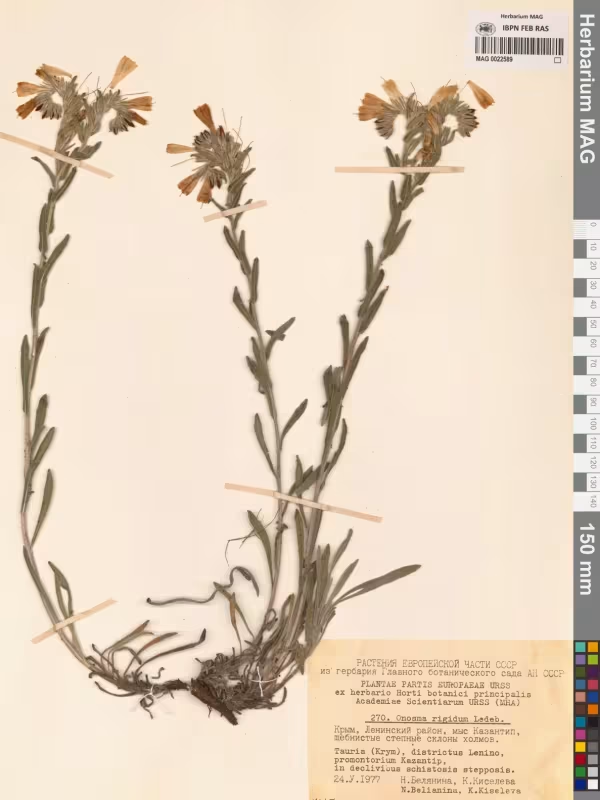
Description
Growing requirements
Onosma rigida belongs to the Boraginaceae family. It is a perennial herbaceous plant native to steppe and semi-desert zones, highly adapted to harsh light conditions and limited moisture levels throughout the growing season.
The plant features distinct rigid hairs covering its entire surface, which serves as a crucial protective mechanism against water evaporation and intense UV radiation. It possesses a deep taproot system, enabling the crop to survive severe droughts and nutrient-poor soil conditions.
Successful cultivation requires well-drained, preferably sandy or stony soils with a neutral to slightly alkaline pH. The plant reacts extremely negatively to waterlogging, which often leads to rapid decay of the root collar and plant death.
As a light-loving and heat-tolerant crop, it performs best in open, sunny locations with proper heat accumulation. It cannot tolerate shade or weed competition during the early stages of development, necessitating careful seedbed preparation and field maintenance.
In terms of agricultural utility, Onosma rigida is valued both as a high-quality honey plant and a source of medicinal raw materials. Biologically active compounds found in the aerial parts possess antiseptic properties relevant for modern pharmaceutical development.
Main diseases and pests
The primary challenge in cultivating this crop is the susceptibility to root rots, which usually occur when soil moisture levels are not properly managed. During periods of high humidity, the plant may also be affected by powdery mildew, targeting the leaf apparatus.
Regarding pests, various insects that feed on vegetative parts at an early stage pose the greatest risk. This includes weevils and several caterpillar species that damage leaves and the apical meristem, hindering development.
Disease prevention is primarily based on implementing crop rotation and ensuring fields are not overly dense. Monitoring groundwater levels and establishing proper drainage systems on heavier soil types is strictly necessary for sustainable yield.
The use of chemical fungicides should be limited, as Onosma can be sensitive to specific synthetic compounds. It is strongly recommended to prioritize biological pest control and focus on maintaining the plant's natural systemic immunity.
Regular cultivation of inter-row spaces is highly recommended, as it not only controls weed growth but also enhances soil aeration. Improved aeration is critical in reducing the prevalence of fungal pathogens within the delicate root zone.