
Onosma rhodopea
Onosma rhodopea
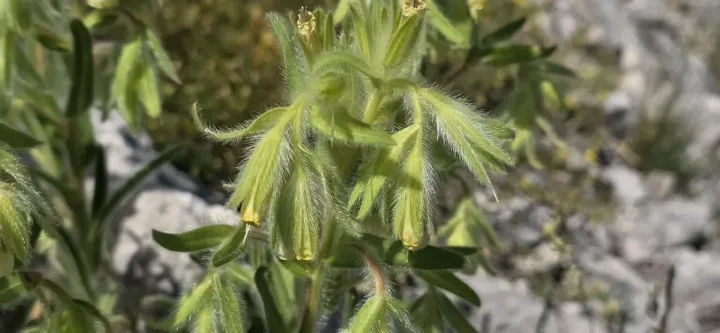
Description
Sowing dates
Onosma rhodopea is propagated primarily through seeds, which should be sown in late autumn or early spring to allow for natural or artificial stratification.
Seed trays should be filled with a gritty, well-draining compost mix, ensuring the seeds are only lightly covered with sand or fine grit.
Germination is generally sporadic and may take several weeks, so maintaining consistent moisture levels without waterlogging the tray is essential.
Once the seedlings are large enough to handle, they should be pricked out into individual pots to prevent root competition and damage.
Propagation by cuttings is also possible but requires careful moisture control to avoid rot, typically performed in a professional mist propagation system.
Growing requirements
Onosma rhodopea belongs to the Boraginaceae family and is native to the rocky, mountainous limestone regions of the Rhodope Mountains.
The plant thrives in full sun, requiring exposure to intense solar radiation to maintain its characteristic compact and hairy foliage structure.
The soil must be extremely well-drained, ideally a lean, stony, or calcareous substrate that mimics its natural high-altitude rocky habitat.
This species is highly drought-tolerant once established, as its deep root system allows it to exploit moisture trapped in rock crevices.
Fertilization should be kept to an absolute minimum; an excess of nitrogen leads to floppy growth and significantly reduces the plant's longevity.
Main diseases and pests
The most significant threat to Onosma rhodopea is root rot caused by poor drainage, particularly during the wet winter months in non-native climates.
Fungal leaf spot diseases can occur if the foliage remains constantly damp, necessitating placement in a position with excellent air circulation.
While generally resistant to pests, aphids may occasionally colonize the flower spikes during the peak blooming period in late spring.
Protection from excessive winter moisture is critical, and many growers choose to place a protective cover or glass over the plants in rainy regions.
Consistent monitoring for early signs of wilting is advised, as the root system, once compromised by rot, is extremely difficult to revive.