
Dwarf golden-drop
Onosma nana
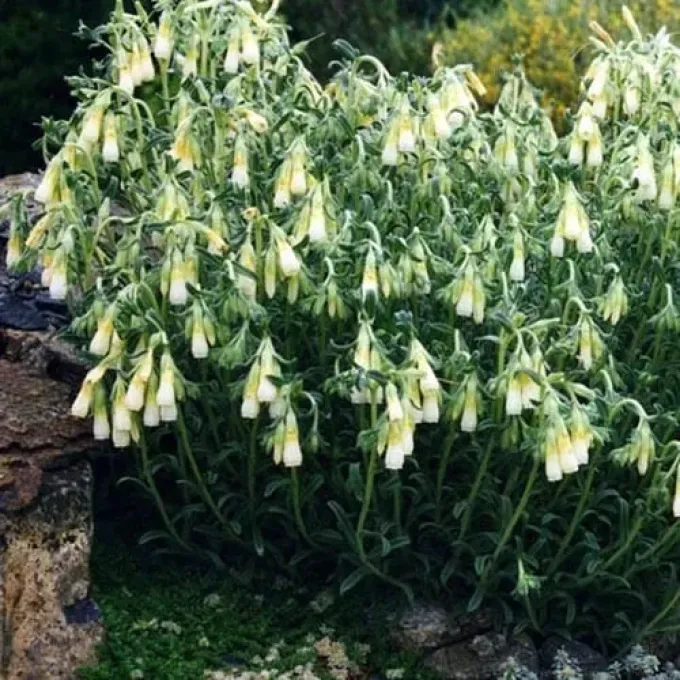
Description
Growing requirements
Dwarf golden-drop (Onosma nana) is a perennial herbaceous plant belonging to the Boraginaceae family. It is characterized by its compact habit and specialized adaptation to rocky, arid habitats typical of its Central Asian origin.
The plant thrives in well-drained, sandy, or stony soils with a neutral to slightly alkaline pH. High permeability is essential, as the species is highly susceptible to root decay when exposed to waterlogged conditions.
As a heliophyte, Onosma nana requires full sun exposure throughout its growing season. It performs optimally in open landscapes where light intensity is high, which promotes better development of its secondary metabolites.
Climate requirements include resistance to drought and temperature extremes. In agricultural settings, it requires minimal irrigation, focusing primarily on maintaining the structural integrity of the soil to prevent compaction.
The economic value of this species lies in its secondary metabolic compounds, which are studied for pharmaceutical applications, as well as its utility in rock garden designs and arid-zone landscaping.
Main diseases and pests
The most significant threats to Onosma nana are fungal pathogens, specifically those causing root and collar rot. These diseases occur predominantly when soil moisture levels exceed the plant's tolerance threshold.
Common insect pests include mites and aphids, which tend to infest the plant during hot and dry spells. These pests damage the foliage and can lead to secondary viral or fungal infections if not addressed promptly.
Management of these threats involves strictly controlled irrigation practices and ensuring that soil aeration is maintained. Providing adequate spacing between plants allows for improved airflow and reduces humidity around the foliage.
When chemical intervention is necessary, the use of targeted fungicides is recommended during the early stages of infection. However, preventive cultural practices, such as removing infested plant parts, often prove more sustainable.
Monitoring for signs of stress, such as leaf wilting or discoloration, is crucial during the early stages of growth to prevent potential outbreaks and ensure a productive crop yield.