
Onosma microcarpa
Onosma microcarpa
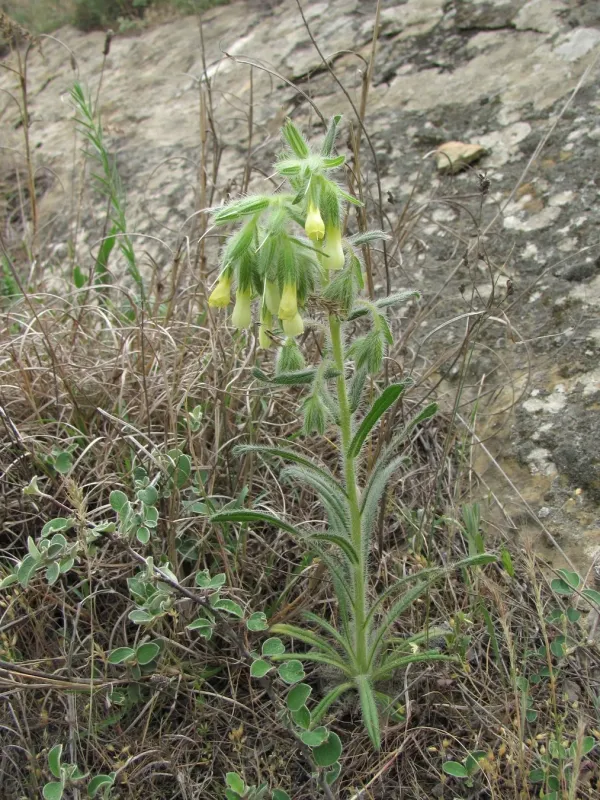
Description
Sowing dates
Onosma microcarpa is a perennial herb belonging to the Boraginaceae family. It is known for its resilience and specific growth cycles that require attention to detail.
The sowing process is ideally conducted in early spring or late autumn, utilizing stratified seeds to ensure higher germination rates across the field.
Seeds should be planted in rows spaced approximately 40 to 50 cm apart, allowing sufficient room for the plant to develop its root system and basal leaf rosette.
Due to the small size of the seeds, they should be sown shallowly, ideally at a depth of no more than 1.5 cm, to allow for proper light penetration during the initial growth stage.
Seedlings develop slowly during the first year, focusing on establishing a strong vegetative base before transitioning into their reproductive phase in the following years.
Growing requirements
The plant thrives in xerophytic conditions and requires full sun exposure, making it an excellent candidate for well-drained, sandy, or rocky soil types.
Poor drainage and excessive soil moisture are detrimental to the plant, as they often lead to root rot and other physiological disorders that reduce crop viability.
Onosma microcarpa exhibits significant tolerance to temperature fluctuations, enabling it to perform well in regions with continental climates and limited annual rainfall.
Standard agronomic maintenance includes keeping the plantation free of competing weeds, particularly in the first two seasons, to minimize competition for nutrients.
Fertilization should be handled with caution, as high levels of nitrogen may compromise the medicinal properties of the plant and cause overly succulent, fragile growth.
Yield
Onosma microcarpa is primarily utilized for its medicinal properties, specifically the accumulation of naphthoquinones within its roots and leaves.
Crop yields vary depending on site-specific soil conditions and management practices, with average yields of dried biomass ranging from 500 to 1,000 kilograms per hectare.
Economic value is driven by the demand for its natural pigments and antimicrobial compounds used in the pharmaceutical and cosmetic industries.
To maximize yields, it is essential to monitor the timing of harvests, as the concentration of active chemical compounds fluctuates significantly throughout the season.
Strategic cultivation on low-fertility sites can be economically viable if the agricultural focus remains on high-quality botanical extraction rather than mass yield volume.
Main diseases and pests
Common threats to the crop include fungal pathogens that exploit high humidity and poor soil ventilation, leading to severe root rot and damping-off issues.
Effective management strategies include implementing crop rotations and avoiding planting Onosma in areas previously occupied by other members of the Boraginaceae family.
Insect pests, such as aphids or certain coleopterans, may periodically infest the foliage, requiring careful observation to prevent damage during the active growing season.
Chemical control should be avoided when possible to maintain the purity of the medicinal product, favoring instead biological control and mechanical weeding.
General field hygiene, such as removing dead plant debris, is crucial for preventing the overwintering of pathogens that could endanger the next harvest.
Harvesting
Harvesting is traditionally performed during the peak flowering stage to capture the maximum concentration of bioactive compounds in the plant's tissues.
The aerial parts are cut approximately 5-10 cm above the soil surface, ensuring that the plant remains capable of regrowth in subsequent seasons if desired.
Post-harvest processing involves rapid drying in well-ventilated, shaded areas at moderate temperatures to prevent the degradation of heat-sensitive active ingredients.
Once dried, the biomass undergoes thorough inspection to remove foreign materials, soil, or weeds, ensuring the final batch meets stringent industry standards.
Storage of the finished product requires dark, cool, and dry facilities to protect the chemical integrity of the plant material over long periods of time.