
Swiss Onosma
Onosma helvetica
Description
Sowing dates
Seeds of Onosma helvetica are best sown in the autumn. Exposing seeds to natural winter temperatures (stratification) significantly improves germination rates in the following spring compared to indoor sowing.
If sowing in the spring, seeds must be artificially stratified in a refrigerator at temperatures between 2 and 5 degrees Celsius for about four weeks. Failure to do this often results in poor or non-existent germination.
Sow seeds shallowly, covering them with only a very thin layer of fine sand or grit. Light is often beneficial for germination, so keeping the seeds near the surface is a common practice among professional growers.
Maintaining a balanced moisture level during germination is a delicate task. The substrate should be slightly damp but never soaked. A fine mist sprayer is ideal for maintaining the necessary humidity without dislodging the seeds.
Once seedlings emerge, they should be given ample space and ventilation. Growing them in pots with a high percentage of volcanic rock or gravel is recommended to allow for easy hardening off before transplanting.
Growing requirements
Swiss Onosma (Onosma helvetica) is a perennial herbaceous plant from the Boraginaceae family. It is native to the mountain regions of Europe, where it is typically found in stony, limestone-rich habitats, showcasing high adaptability to nutrient-poor environments.
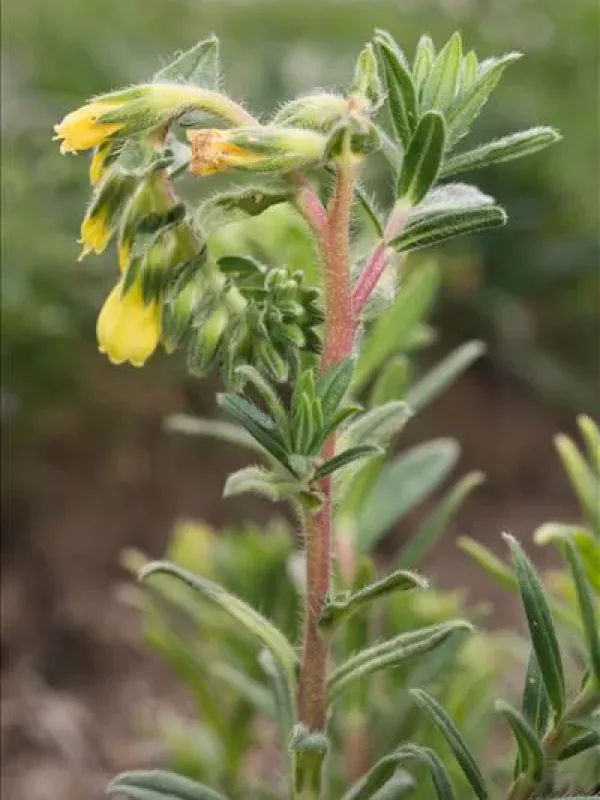
The plant is characterized by its drought-tolerant nature, supported by a deep taproot that reaches moisture stored in rock crevices. Its leaves are covered in distinct, stiff hairs, an evolutionary trait that minimizes water loss through transpiration.
For successful growth, this plant demands soil with exceptional drainage. Stagnant water is the primary enemy of the species, so cultivation in heavy or clay-based soils should be avoided in favor of gritty, rocky substrates.
Full sun is essential for the Swiss Onosma. It requires intense sunlight to maintain its structural integrity and promote blooming. Even partial shade can cause the plant to become etiolated and significantly shorten its lifespan.
The plant is well-adapted to cooler alpine temperatures, though it requires dry conditions during winter dormancy. Protecting the plant from excessive autumn and winter rainfall is critical to preventing crown rot.
Main diseases and pests
Root rot caused by fungal infections is the most significant threat to Swiss Onosma. It is almost always a result of poor drainage or overwatering, necessitating strict adherence to irrigation schedules.
Pests such as aphids may occasionally colonize the flower stalks during the early summer. While usually not fatal, they can weaken the plant and reduce its aesthetic value and seed production.
Preventative measures include the use of gravel mulch around the base of the plant. This keeps the crown area dry and prevents contact between the leaves and wet soil, which is crucial for disease avoidance.
In humid climates, powdery mildew can occur if there is insufficient air movement. Ensuring the plants are spaced out properly is the most effective cultural method to combat this condition.
If chemical intervention is necessary, systemic fungicides should be used sparingly and only if there are clear signs of infection, as the plant can be sensitive to certain concentrated chemical applications.