
Giant Onosma
Onosma gigantea
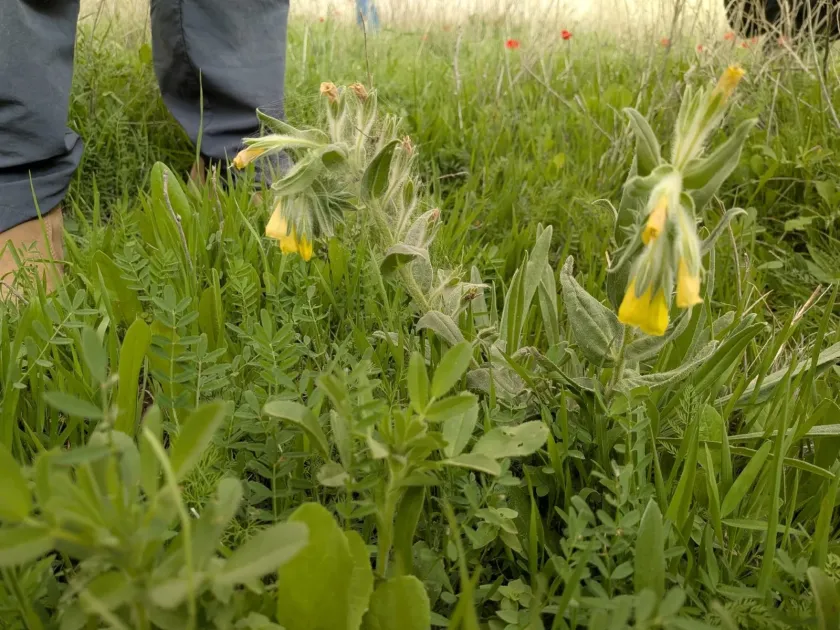
Description
Sowing dates
Onosma gigantea, belonging to the Boraginaceae family, is a hardy herbaceous perennial known for its resilience in various soil types. It is particularly valued for its potential in medicinal and ornamental applications.
The optimal sowing time is during early spring when soil temperatures reach 10 degrees Celsius, allowing the seeds to germinate effectively under natural lighting conditions.
For successful establishment, seeds should be sown at a shallow depth of 1-2 centimeters. This ensures proper light exposure while maintaining adequate moisture contact with the soil surface.
Row spacing should be maintained between 45 and 60 centimeters to facilitate efficient weed control and allow air to circulate freely around the developing rosettes.
In regions with milder winters, late autumn sowing is also a viable option, as cold stratification can improve germination rates for the following spring season.
Growing requirements
This species thrives in open, sunny locations. It requires well-drained, calcareous, or sandy soils, as it is highly sensitive to waterlogging and poor soil aeration.
As a drought-tolerant crop, the plant develops a robust taproot system that reaches deep into the subsoil, making it suitable for cultivation in semi-arid and steppe regions.
The climate should be characterized by dry summers, which are ideal for the plant's physiological needs and help prevent foliage-related diseases caused by high humidity.
Regular cultivation of the soil between rows is essential to suppress weeds and maintain an optimal moisture balance, especially during the plant's first year of growth.
While the plant is winter-hardy, mulching during the first winter can provide extra protection against harsh frost, ensuring a strong start for the following vegetation cycle.
Yield
The primary economic value of Onosma gigantea lies in its roots, which are a rich source of alkaloids and pigments, such as shikonin, used in the pharmaceutical and dye industries.
Harvest yield is optimized when plants are allowed to mature for at least 3 years, allowing for significant accumulation of secondary metabolites in the root system.
Beyond its chemical value, the species serves as an excellent melliferous crop, attracting pollinators for an extended period during its peak flowering season.
The plant can also be utilized for soil stabilization and phytoremediation of degraded slopes, where its deep roots help to improve soil structure and prevent erosion.
Consistent market demand for natural botanical ingredients makes the cultivation of this species a potentially profitable venture for specialty crop farmers.
Main diseases and pests
Root rot is the most significant threat to the crop, typically triggered by excessive moisture or poor soil drainage, which can lead to rapid crop failure.
Pest pressures include leaf-feeding beetles and occasionally aphids, which may target the plant's foliage and young buds during the peak of the growing season.
Cultural control measures, such as proper crop rotation and avoiding overly dense planting, are the most effective strategies for preventing disease outbreaks.
In humid years, fungal infections such as rust may occur on the leaves; this requires diligent monitoring and the application of appropriate fungicidal treatments if necessary.
Removal of infected plant material and ensuring clean field conditions are critical steps in maintaining the overall health and productivity of the planting.
Harvesting
The harvest of roots, the most commercially valuable part, occurs in the autumn of the third year, once the plant has reached peak chemical maturity.
Harvesting involves deep digging, followed by thorough cleaning to remove soil particles and a carefully controlled drying process below 40 degrees Celsius.
Seed collection is performed selectively due to the staggered ripening nature of the inflorescences, requiring multiple passes through the field to ensure quality.
Stored raw materials must be kept in dry, well-ventilated areas away from direct sunlight to preserve the integrity of the botanical active components.
After the harvest, the fields should be deep-plowed to incorporate remaining debris and prepare the land for subsequent crop rotation cycles.