
Onosma erecta
Onosma erecta
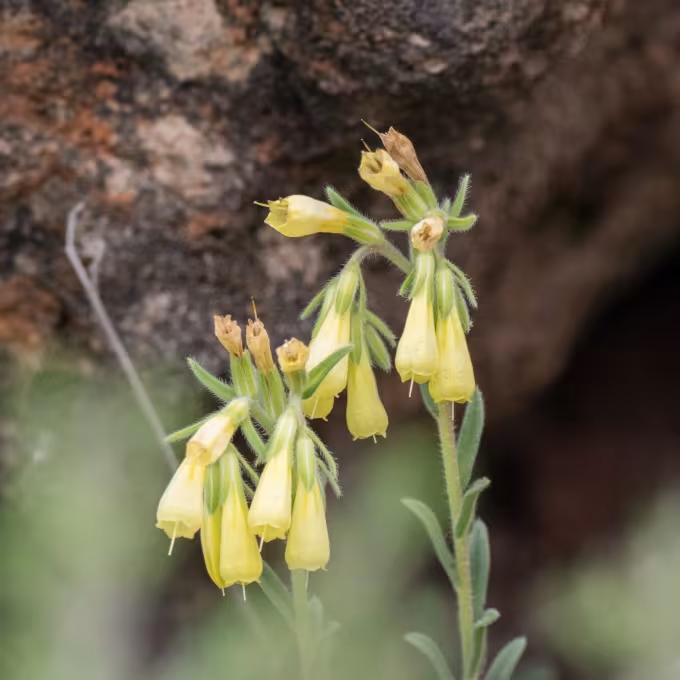
Description
Sowing dates
Onosma erecta is a perennial herbaceous plant belonging to the Boraginaceae family. Known for its distinct pubescence, the plant is well-adapted to harsh conditions and rocky terrains.
Sowing should ideally occur in the autumn to allow for natural stratification, which significantly improves seed germination rates compared to spring planting.
Seeds should be sown at a depth of approximately 0.5 to 1 cm. It is essential to use a loose, well-draining substrate to ensure that delicate seedlings are not suffocated by compact soil.
In large-scale production, maintain row spacing of about 40 cm. This spacing allows for proper ventilation and ease of weeding during the initial development phases of the plant.
Seedlings emerge slowly and require patience. During the first growing season, the plants focus on developing a robust basal rosette, which makes them vulnerable to invasive weed species.
Growing requirements
As a true xerophyte, Onosma erecta demands full sun exposure. Any significant shading will result in weak, etiolated stems and a marked reduction in flower production.
The plant thrives in calcareous, gravelly, or sandy soils. It is highly intolerant of waterlogged soil, which quickly causes root decay and eventual death of the entire plant.
It prefers a neutral to slightly alkaline soil pH. Improving soil drainage with coarse sand or fine gravel is highly recommended for sites with heavier, clay-based soil composition.
Once established, the species shows remarkable drought resistance, making it an excellent candidate for xeriscaping or low-maintenance gardening in arid climates.
Avoid excessive fertilization. High nitrogen levels stimulate excessive vegetative growth, which can make the plants prone to winter damage and reduce their natural resilience.
Main diseases and pests
The primary threats to Onosma erecta are root-rotting fungi triggered by poor soil drainage. Pathogens like Fusarium can decimate a crop if the soil remains damp for too long.
In humid conditions, powdery mildew may affect the foliage. Ensuring adequate airflow and avoiding dense planting are key strategies to mitigate the risk of fungal outbreaks.
Pests such as aphids may congregate on the developing flower buds, especially during stress periods. Regular monitoring is essential to prevent significant damage to the inflorescences.
Invasive grasses are the most significant competition for this species in the field. Effective manual or mechanical weeding is required during the first year of establishment.
- Maintain good drainage systems in the field.
- Use resistant varieties if available.
- Perform timely removal of dead leaves to prevent disease spread.
Harvesting
For medicinal purposes, the aerial parts should be harvested at the height of the flowering season when the concentration of essential active compounds is at its peak.
Drying must be done in a shaded, well-ventilated area. High temperatures or direct sunlight during the drying process will degrade the quality of the raw material.
Seed harvest requires careful attention due to uneven maturation. It is advisable to harvest in stages as the seeds darken to ensure the highest quality yield.
Once dried, the raw material should be stored in cool, dark containers or paper bags to prevent moisture accumulation and preserve the aromatic properties of the plant.
Beyond its medicinal potential, Onosma erecta serves as a valuable nectar source for pollinators, significantly contributing to the local biodiversity of the surrounding area.