
Nepenthes vogelii
Nepenthes vogelii Schuit. & de Vogel
Description
Growing requirements
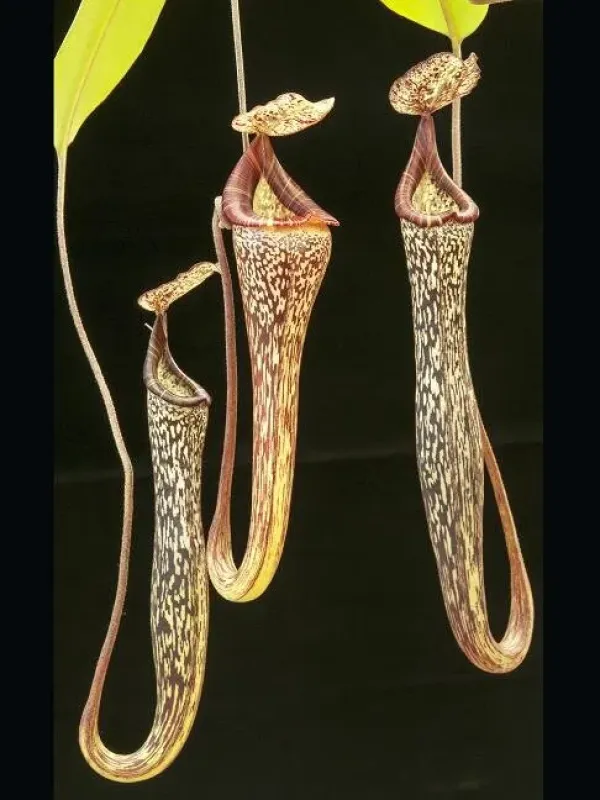
Nepenthes vogelii is a fascinating species belonging to the Nepenthaceae family. This tropical pitcher plant is endemic to the mountainous regions of Borneo, where it grows as an epiphyte in high-altitude forests.
To cultivate this species successfully, growers must replicate its montane climate. This involves maintaining a warm daytime temperature with a distinct cooling drop at night, which is vital for metabolic health.
The growing medium must be highly acidic and nutrient-poor. A standard potting mix consists of long-fiber sphagnum moss, perlite, and orchid bark, ensuring the roots have access to oxygen at all times.
Watering is a critical aspect of plant management. Only mineral-free water, such as reverse osmosis or distilled water, should be used, as the plant's root system is extremely sensitive to dissolved solids.
Humidity levels should remain consistently high, ideally ranging from 70% to 90%. Proper air circulation is necessary to mimic the breezes of its native cloud forest environment and prevent fungal growth.
Main diseases and pests
Mineral buildup in the substrate is the primary threat to Nepenthes vogelii. Over-fertilization or the use of tap water can lead to root burn and the rapid decline of the entire specimen.
Fungal pathogens such as Botrytis or root rot are common in stagnant environments. Poor ventilation coupled with high humidity significantly increases the risk of these infections.
Pests like mealybugs and spider mites thrive in indoor collections. They feed on the succulent parts of the plant and can transmit viruses, severely impacting the formation of new pitchers.
Inappropriate light levels can cause physiological stress. Too little light prevents pitcher development, while intense, unfiltered sunlight can cause severe leaf scorch and dehydration.
Biological control methods are preferred when dealing with pests. When using chemical pesticides, always ensure they are safe for carnivorous plants, as many standard products are lethal to this species.