
Nepenthes lingulata x truncata
Nepenthes lingulata Chi. C. Lee et al. x Nepenthes truncata Macfarl.
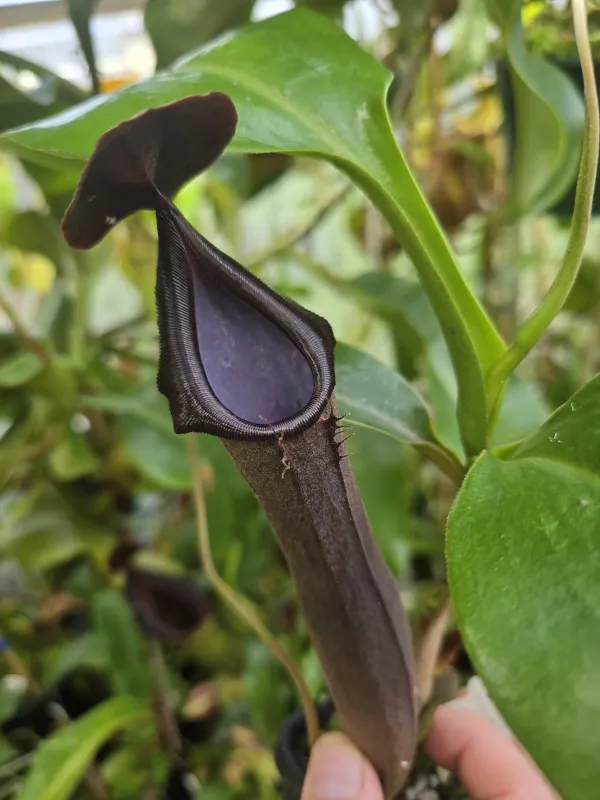
Description
Growing requirements
Nepenthes lingulata x truncata is a striking interspecific hybrid belonging to the Nepenthaceae family. It inherits the unique lingulate appendage from its parent N. lingulata and the robust, wide leaf structure of N. truncata, creating a highly desirable specimen.
This hybrid thrives in tropical conditions with daytime temperatures ranging from 22°C to 28°C and slightly cooler nights. Maintaining stable environmental parameters is critical for the continuous production of its complex pitchers.
The planting medium must be highly aerated and acidic, typically composed of long-fiber sphagnum moss, perlite, and bark. This substrate composition prevents compaction, which is vital for the health of the sensitive root system of this carnivorous plant.
High humidity is essential for pitcher development; levels between 70% and 90% are considered ideal. Using a controlled climate chamber or greenhouse is recommended to maintain these parameters consistently throughout the growing season.
Watering should be performed only with purified, distilled, or reverse osmosis water. The plant is extremely sensitive to mineral salts found in tap water, which can lead to rapid decline and mortality if allowed to accumulate in the growing medium.
Main diseases and pests
Root rot is the most common physiological challenge, often caused by stagnant water or a substrate that lacks sufficient porosity. Ensuring a fast-draining potting mix is the best way to avoid this fatal condition.
Mealybugs and spider mites represent the primary insect threats to this hybrid. These pests thrive in indoor collections and can quickly weaken the plant by feeding on the sap of young leaves and pitcher tendrils.
Fungal pathogens such as leaf spot can become an issue if ventilation is poor. Implementing fans or active airflow systems within the cultivation area is a standard practice to mitigate the spread of fungal spores in high-humidity environments.
Aphids may occasionally target new growth. Integrated pest management, focusing on physical removal and the use of insecticidal soaps specifically tested for carnivorous plants, is recommended to manage infestations without chemical damage.
Stunted growth or loss of pitcher production is often an indicator of inadequate light or root distress. Regular monitoring of both the root zone and leaf health allows for timely intervention to keep the plant in peak condition.