
Nepenthes ventricosa x vogelii hybrid
hybrids between Nepenthes ventricosa Blanco and Nepenthes vogelii Schuit. & de Vogel
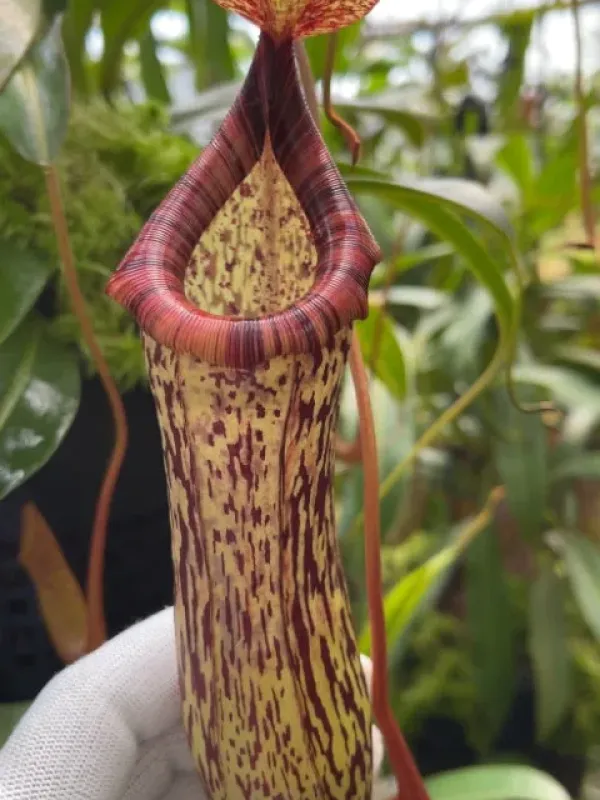
Description
Growing requirements
The hybrid of Nepenthes ventricosa and Nepenthes vogelii is a distinct specimen within the Nepenthaceae family. It is prized by collectors for its elegant pitchers that combine the hardy nature of the ventricosa parent with the unique, slender features of vogelii.
Success in cultivation requires high ambient humidity levels, typically between 70% and 85%. Maintaining these levels is essential for the continuous development of pitchers and the overall health of the tropical foliage.
Lighting conditions must be bright and diffuse. Direct sunlight, especially in the afternoon, can scorch the leaves and damage the pitcher walls, while low light levels result in the plant failing to produce any traps at all.
The substrate must be acidic, well-draining, and nutrient-poor. A mixture of long-fibered sphagnum moss, perlite, and pine bark is recommended to mimic the natural epiphytic growing conditions of the species.
Irrigation must only be performed with low-mineral water, such as distilled or reverse osmosis water. Minerals found in tap water accumulate in the medium and will damage the sensitive root system, eventually leading to plant death.
Main diseases and pests
Pest infestations, particularly mealybugs and spider mites, are common in indoor growing environments. These pests thrive in stagnant air and can cause significant damage to the plant's delicate growing points.
Root rot is the most serious threat, caused by waterlogged soil and poor aeration. The medium must be kept moist but never saturated, as the lack of oxygen leads to rapid tissue necrosis in the root system.
Fungal infections, such as leaf spot, are prevalent in setups with poor air circulation. Installing small ventilation fans helps to prevent moisture accumulation on the leaf surfaces, thereby reducing the risk of pathogen spread.
Improper fertilization remains a significant threat. Because these plants have evolved to obtain nutrients via their pitchers, applying traditional fertilizers to the soil will quickly lead to root burn and death.
Physical stress from frequent repotting or handling can severely set back the plant. It is best to minimize disturbance to the root ball and ensure the plant has a stable environment to minimize recovery time.