
Hybrid Nepenthes
hybrids between Nepenthes ampullaria Jack, Nepenthes sibuyanensis Nerz and Nepenthes ventricosa Blanco
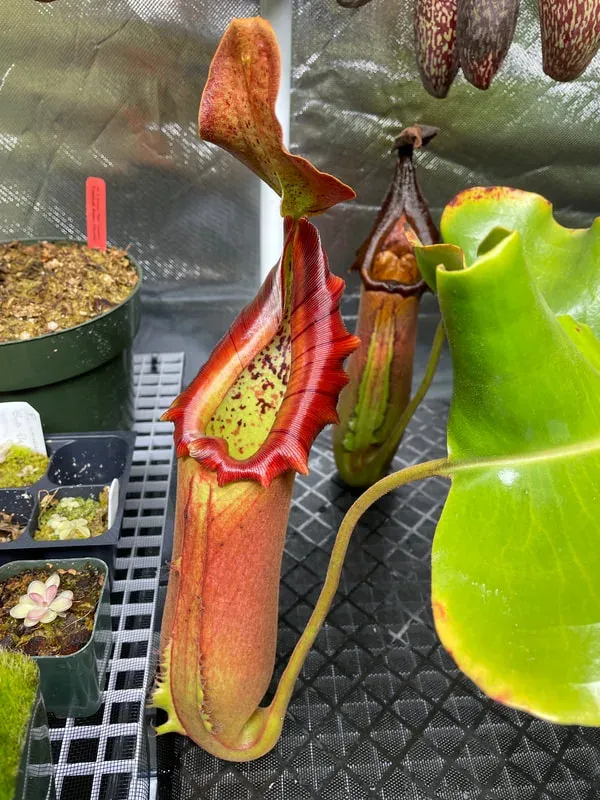
Description
Growing requirements
Hybrid Nepenthes, derived from Nepenthes ampullaria, Nepenthes sibuyanensis, and Nepenthes ventricosa, belong to the Nepenthaceae family. These plants are specialized tropical carnivores that utilize modified leaf tips to trap insects, which serve as a primary source of nitrogen in nutrient-poor environments.
Cultivation requirements demand a highly controlled environment, typical of professional greenhouse settings. The plants require high humidity levels, ideally maintained between 70% and 85%, to ensure the successful formation and preservation of the pitchers.
Light intensity is another critical factor. While they thrive in bright conditions, they are sensitive to harsh, direct sunlight. Diffused light or LED grow lights providing a specific spectrum are recommended for optimal metabolic activity and coloration of the traps.
The potting medium must be strictly inert, acidic, and well-draining. A typical agricultural substrate for this hybrid consists of long-fiber sphagnum moss, perlite, and peat, which allows for oxygen exchange around the sensitive root system.
Temperature control should mimic the highland or intermediate habitats of the parent species. Providing a diurnal temperature variance, with cooler nights, is essential to prevent physiological stress and promote healthy, robust growth throughout the year.
Main diseases and pests
Pest management is focused on common greenhouse insects, specifically mealybugs, aphids, and spider mites. Due to the plant's delicate nature, chemical control must be performed with specialized horticultural products that are safe for carnivorous flora.
Root rot is the most prevalent threat, usually induced by waterlogged conditions and poor ventilation. Ensuring adequate drainage and avoiding heavy, compacted potting media are the primary preventive measures taken by professional growers.
Fungal pathogens such as leaf spot may occur if the ambient air remains stagnant for too long. Improving air circulation within the greenhouse is the most effective cultural practice to mitigate the risk of spreading fungal spores.
The accumulation of minerals from hard water is a significant threat that can kill the plant over time. Professional irrigation systems always utilize reverse osmosis or distilled water to maintain a low electrical conductivity in the growing medium.
Inappropriate fertilization is a major risk, as these plants lack the ability to process high concentrations of soil-based nutrients. Feeding should be restricted to natural insect intake or highly diluted, specialized foliar sprays specifically designed for Nepenthes.