
Nepenthes ventricosa
Nepenthes ventricosa Blanco
Description
Growing requirements
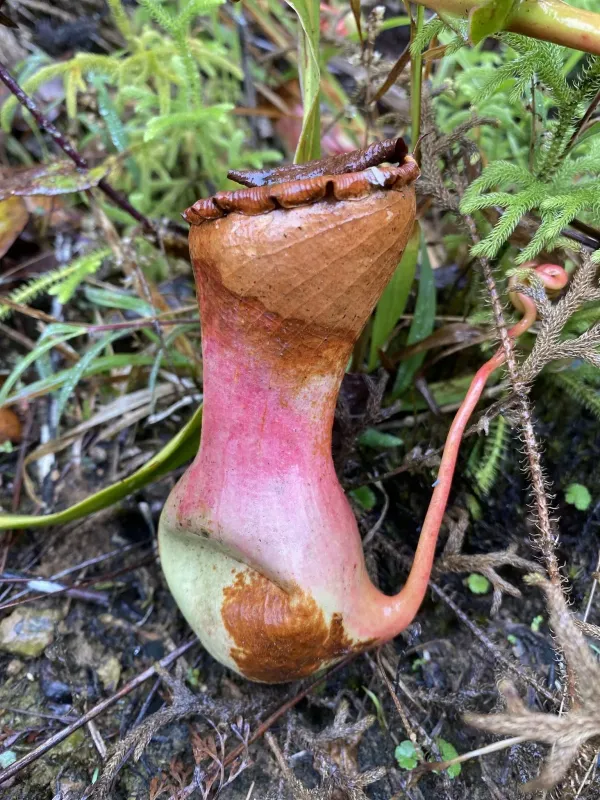
Nepenthes ventricosa is a prominent member of the Nepenthaceae family, native to the mountainous regions of the Philippines. As a tropical pitcher plant, it typically inhabits cloud forests, where it thrives in conditions characterized by high humidity and constant moisture.
Cultivation of this species requires a specific microclimate: daytime temperatures should range between 20°C and 28°C, while a slight temperature drop at night significantly improves the plant's health. Bright, indirect light is essential for the development of its distinctive pitchers.
The substrate must be extremely well-draining, consisting of long-fiber sphagnum moss or a mixture of perlite and peat. It is vital to ensure that the medium is free from any traditional potting fertilizers, as the plant obtains its nutrients via insect digestion.
Watering requires high-quality mineral-free water, such as distilled or reverse osmosis water. Maintaining a consistently moist growing medium without waterlogging the roots is the key to successful agronomy for this specific genus.
In terms of economic utility, Nepenthes ventricosa is highly sought after by commercial growers and hobbyists globally. It is considered one of the most robust and accessible species within the genus, making it a staple in specialized botanical trade and greenhouse production.
Main diseases and pests
Typical pests affecting this culture include mealybugs and spider mites. These pests thrive in dry environments, making it crucial to maintain ambient humidity levels to prevent infestations that can weaken the plant's structural integrity.
Root rot, often caused by stagnant water or the use of heavy, non-porous soil, remains the most lethal threat to the plant. Furthermore, leaf spot diseases can appear if the foliage is kept excessively wet in an environment with poor airflow.