
Nepenthes rafflesiana x sibuyanensis
Nepenthes rafflesiana x Nepenthes sibuyanensis
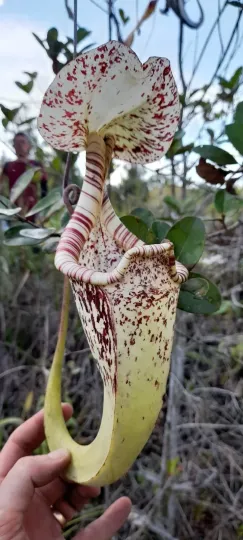
Description
Growing requirements
Nepenthes rafflesiana x sibuyanensis is a notable hybrid from the Nepenthaceae family, valued in horticultural circles for its impressive, robust pitchers and distinct genetic characteristics inherited from its parents.
This hybrid thrives in high humidity environments, ideally between 70 and 85 percent, which is critical for the proper development and inflation of the pitchers during the growth phase.
Temperature management is key to success, requiring daytime temperatures around 25 degrees Celsius and a slight drop at night to ensure the plant experiences a natural diurnal cycle.
The substrate must be highly aerated and nutrient-poor, typically composed of a mixture of long-fibered sphagnum moss and perlite or pumice to allow for excellent drainage and root oxygenation.
Watering protocols are strict: only distilled, rainwater, or deionized water should be used to prevent mineral buildup, which can be fatal to these sensitive carnivorous specimens.
Main diseases and pests
The most common agricultural threats to this plant are root rot and stem rot, usually caused by overwatering or stagnant, waterlogged substrate that lacks sufficient air circulation.
Pests such as scale insects and mealybugs can pose a significant threat by hiding in the dense foliage, which requires manual removal or careful application of specialized oils.
Spider mites are another major concern, especially in greenhouse environments where the air circulation might be insufficient and the temperatures remain high for extended periods.
Fungal infections can quickly compromise the plant's health, often manifesting as spots on the pitchers or leaves, necessitating the use of systemic fungicides adapted for sensitive species.
Maintaining a clean growing area and removing dead pitchers is essential to prevent the spread of mold and bacteria that can infect the rest of the plant's structure.