
Khasia pitcher plant
Nepenthes khasiana Hook. f.
Description
Growing requirements
The Khasia pitcher plant (Nepenthes khasiana Hook. f.) is a carnivorous plant belonging to the Nepenthaceae family. It is an endemic species native to the Khasi Hills in the Meghalaya state of India, where it thrives in humid tropical forest environments at moderate elevations.
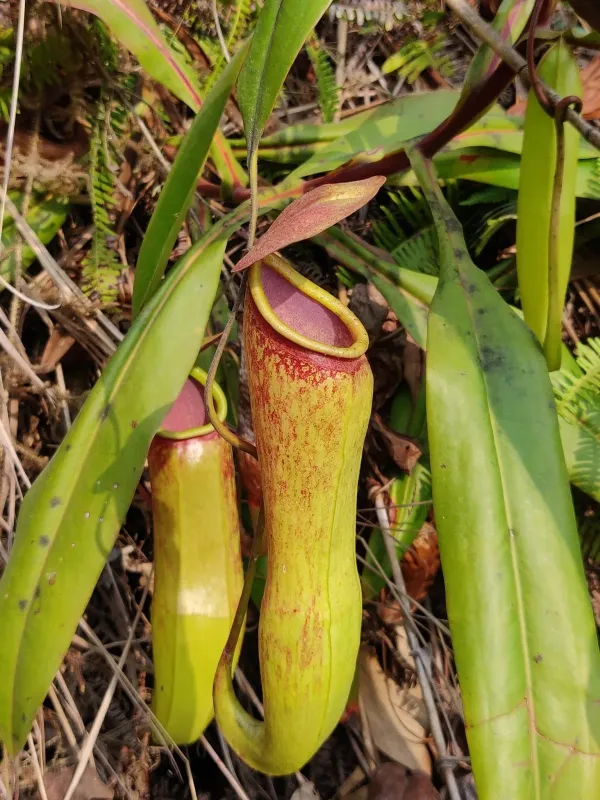
Botanically, the species is distinguished by its unique insect-trapping pitchers, which function as modified leaves. These traps contain specialized digestive enzymes that allow the plant to thrive in nutrient-poor environments by supplementing its diet with organic matter derived from trapped insects.
To successfully cultivate this species, growers must mimic its natural high-humidity environment, ensuring levels remain consistently between 70% and 80%. Proper ventilation is equally essential to prevent stagnant air, which can promote fungal growth on the pitcher surfaces.
The growing medium should be exceptionally low in mineral content, as the plant is highly sensitive to soil nutrients. A mixture of live sphagnum moss and inorganic drainage materials like perlite is recommended. Fertilisers should be avoided entirely to prevent chemical burning of the roots.
The horticultural utility of the Khasia pitcher plant lies in scientific research and specialist conservatory cultivation. Due to its status as an endangered and strictly protected species, its propagation is largely focused on conservation efforts rather than commercial production.
Main diseases and pests
Common pests affecting this culture include mealybugs and spider mites, which thrive in dry conditions. Additionally, fungal infections such as Botrytis can devastate the plants if humidity levels are too high without adequate airflow, leading to rapid rotting of the pitchers.