
Neillia affinis
Neillia affinis
Description
Growing requirements
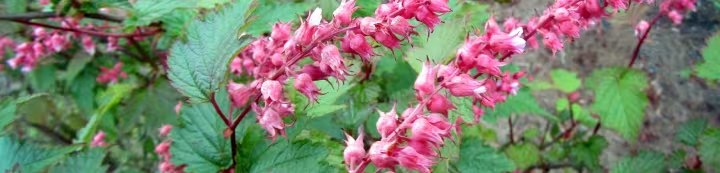
Neillia affinis is a deciduous shrub belonging to the Rosaceae family. It is highly valued in horticulture for its elegant, arching branches and spikes of small, pinkish bell-shaped flowers that bloom in spring.
Originating from the mountain regions of China, this plant thrives in environments that offer moderate humidity and protection from harsh environmental stressors. It typically reaches a moderate height, making it suitable for mixed shrub borders.
The cultural requirements demand well-draining, nutrient-rich soil. It is essential to avoid sites prone to waterlogging, as the root system is sensitive to prolonged moisture, which can lead to rapid decay.
For optimal health, choose a location with dappled sunlight or partial shade. While it can tolerate more sun in cooler climates, protection from intense afternoon heat is advisable to prevent premature leaf scorching.
Maintenance involves routine pruning immediately after flowering to stimulate new growth. This ensures that the plant retains its graceful shape and maintains vigorous blooming cycles for the following season.
Main diseases and pests
Like many members of the Rosaceae family, Neillia affinis is susceptible to certain fungal diseases if the planting site does not allow for proper airflow.
Powdery mildew represents a primary threat, particularly during humid summers. It manifests as a white, dusty growth on the foliage and requires prompt treatment with appropriate fungicides.
Pests such as aphids and spider mites can colonize the soft, new growth during dry periods. These insects can cause stunted development and discoloration if left unmanaged.
Gardeners should prioritize cultural practices that promote plant vigor, such as mulching to retain root moisture and balanced fertilization to enhance resilience against stressors.
Regular inspections of the underside of leaves are recommended to detect early signs of pest infestation, allowing for manual intervention or biological control application.