
Spiny naiad
Najas minor
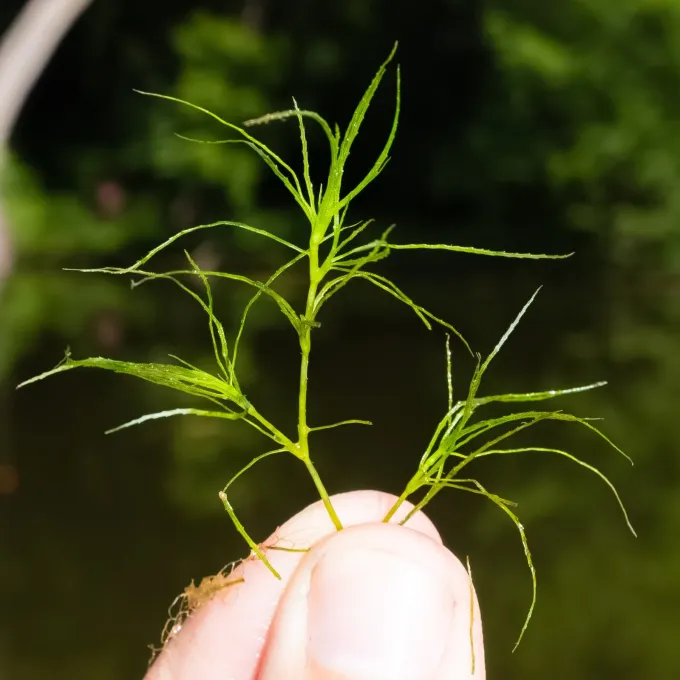
Description
Sowing dates
The spiny naiad is an annual aquatic plant belonging to the Hydrocharitaceae family. Under natural conditions, its life cycle begins in the spring when, following the warming of the water, seeds that settled at the bottom of the reservoir in the previous season germinate.
Propagation of this species occurs exclusively through seeds, making the timing of ice melt and the water temperature regime critical factors for the onset of the growing season. The optimal temperature range for active shoot growth is between 20 and 28 degrees Celsius.
The plant's life cycle concludes in the autumn, marked by massive fruit production and the die-back of the vegetative mass. The plant is capable of forming dense underwater thickets, which are completely renewed each year from the seed bank in the substrate.
For artificial introduction or cultivation in reservoirs, naiad seeds require a preliminary dormancy period under low-temperature conditions, which mimics natural overwintering. Planting is recommended in the bottom substrate at a depth of up to 2-3 centimeters.
In an agronomic sense, the spiny naiad is not a traditional field crop, but it is actively used to create biocenoses in enclosed water bodies and as a component of phytoremediation systems.
Growing requirements
The spiny naiad has high requirements regarding water quality and light availability. The best development is observed in shallow areas of lakes, ponds, and slow-moving rivers with silty or sandy-silty bottoms.
The plant prefers stagnant or slow-flowing water rich in mineral substances. Excessive organic pollution can suppress the growth of the culture, so the quality of water management in a hydrophyte environment directly depends on water clarity.
A crucial requirement is sufficient insolation: the naiad is sensitive to shading and significantly reduces its biomass in low-light conditions. Optimal depths for its cultivation range from 0.5 to 2 meters.
The chemical composition of the water should be moderately alkaline or neutral. Sharp fluctuations in the water level of the reservoir can lead to damage to young shoots and a decrease in the overall productivity of the plant community.
The culture has high tolerance to water mineralization, which allows it to be used in specific conditions for the biological purification of wastewater or for oxygenating the aquatic environment during the summer period.
Main diseases and pests
The main threats to the normal development of the spiny naiad are phytopathogenic fungi and bacterial infections that develop during water stagnation and the accumulation of excess biomass in reservoirs.
Among the pests, various mollusks and insect larvae should be highlighted, which feed on the tender stems and leaves of the naiad, which can significantly reduce the total mass of the plant at the peak of vegetation.
Competition with other hydrophyte species, such as Elodea or Potamogeton, often causes the suppression of the spiny naiad population. In aggressive competitive environments, it is quickly displaced by more robust perennial weeds.
Anthropogenic influence, expressed in the discharge of chemical herbicides or sudden changes in water composition, leads to the death of the naiad, as the plant is extremely sensitive to toxic impurities and agrochemicals.
Disease prevention consists of maintaining the biological balance in the reservoir, regular monitoring of water composition, and limiting the entry of foreign invasive plant species capable of suppressing the crop growth.