
Chinese naiad
Najas chinensis
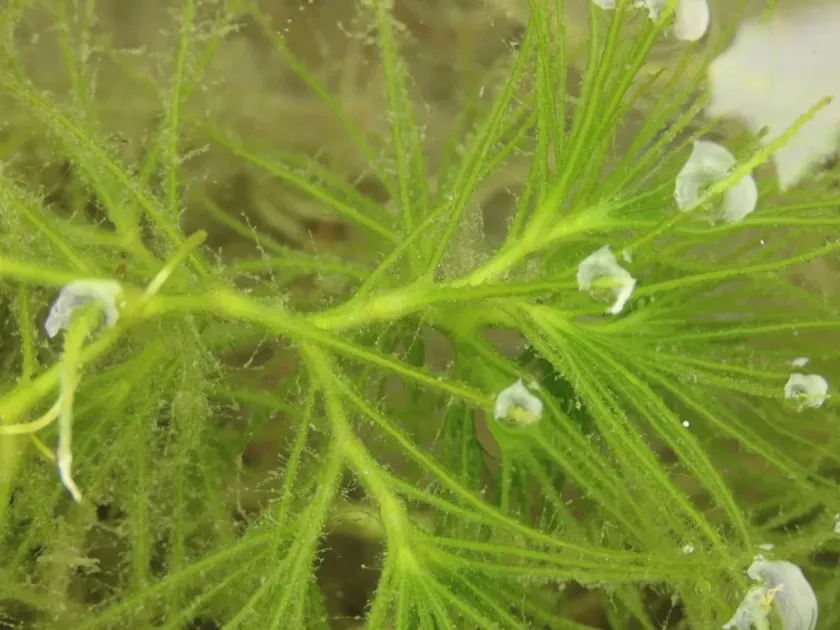
Description
Growing requirements
The Chinese naiad (Najas chinensis) is a submerged annual aquatic plant belonging to the Hydrocharitaceae family. It is characterized by slender, highly branched stems and leaves with finely serrated margins, which serve as an important shelter for juvenile aquatic organisms.
Originating from East Asian regions, including China and Japan, this species is well-adapted to stagnant or slow-moving freshwater ecosystems. It naturally thrives in lakes, ponds, and irrigation ditches where environmental stability is high and nutrient availability is consistent.
Climate requirements for the Chinese naiad are strictly tropical to temperate. The plant requires warm water temperatures, ideally between 20 and 28 degrees Celsius, to support its rapid vegetative life cycle and biomass production throughout the growing season.
Soil and light requirements are equally critical for successful development. The plant prefers organic-rich, silty sediments at the bottom of the water body and requires significant light penetration. If the water becomes too turbid, the plants struggle to undergo photosynthesis and eventually decline.
Economically, the Chinese naiad is a valuable component in aquaculture systems. It acts as a primary feed source for herbivorous fish species and plays a crucial role in water purification by absorbing excess nitrogen and phosphorus, thereby maintaining optimal water quality.
Main diseases and pests
Fungal infections are the most common threats to Najas chinensis, especially during periods of suboptimal temperature fluctuations. These pathogens can cause rapid degradation of the plant tissue, leading to widespread decay if not managed effectively through water sanitation.
Pests such as certain aquatic snail species and larval insects can significantly impact plant density. These herbivores feed on the delicate stems and leaves, potentially leading to the complete failure of an aquatic crop if the population density is not monitored.
Invasive species competition represents a significant challenge in maintaining a mono-culture. Aggressive weeds that form dense surface mats block the necessary light required by the submerged naiad, ultimately choking out the primary crop and depleting local resources.
Chemical contamination, particularly runoff from agricultural fertilizers and pesticides, poses a terminal risk to the Chinese naiad. As a highly sensitive aquatic organism, the plant cannot tolerate toxic concentrations and will show signs of necrosis within hours of exposure.
Successful crop management relies on regular inspection of the water column and early intervention. Providing adequate space and maintaining healthy water circulation can significantly reduce the risk of disease transmission among the plant clusters.