
Indian naiad
Najas indica
Description
Growing requirements
Indian naiad (Najas indica) is a submerged annual aquatic plant belonging to the Hydrocharitaceae family. It is native to tropical and subtropical regions of Asia, primarily inhabiting stagnant freshwater systems, marshes, and agricultural irrigation channels.
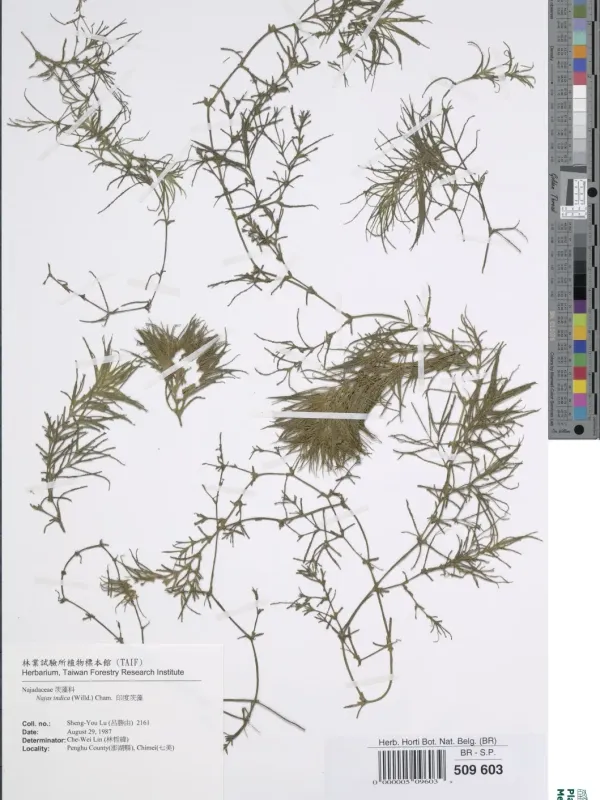
The plant features fragile, branched stems typically reaching 30 to 60 centimeters in length. Its leaves are linear and serrated along the edges. As a submerged hydrophyte, it lacks a robust root system, relying primarily on nutrient uptake through its foliage directly from the water column.
For successful cultivation, the water temperature should be maintained between 22°C and 28°C. The species is highly sensitive to rapid environmental changes and requires high-intensity lighting to support its rapid growth rate and photosynthetic activity.
Regarding water chemistry, Najas indica thrives in soft to medium-hard water with a neutral or slightly acidic pH level. A consistent supply of dissolved carbon dioxide is crucial for maintaining biomass production in intensive cultivation environments.
In agricultural and ornamental applications, the species serves as an efficient biofilter. Its ability to rapidly sequester nitrates and phosphates makes it an excellent choice for maintaining water quality in aquaponic systems and artificial aquaculture reservoirs.
Main diseases and pests
The primary threats to this culture are fungal pathogens, which often proliferate in environments with poor water circulation. These pathogens can cause stem necrosis and overall decline if the water quality is not strictly monitored and filtered.
Invertebrate pests, such as aquatic snails, can cause significant mechanical damage to the delicate stems, leading to stunted growth. Furthermore, competitive algae species can overgrow the naiad, reducing light penetration and outcompeting the plant for essential minerals.