
Najas armata
Najas armata
Description
Growing requirements
Najas armata is a submerged annual aquatic plant belonging to the Hydrocharitaceae family. It is a true hydrophyte, spending its entire life cycle entirely submerged in freshwater ecosystems such as lakes, ponds, and drainage canals.
The plant thrives in environments with still or slow-moving water, requiring a substrate rich in organic matter and silt. Adequate light penetration is a primary requirement for photosynthesis and development, making shallow, clear-water zones ideal for colonization.
Optimal water temperatures for vigorous growth range between 20 and 28 degrees Celsius. Najas armata exhibits high adaptive capacity, allowing it to quickly colonize available niches in nutrient-rich freshwater bodies.
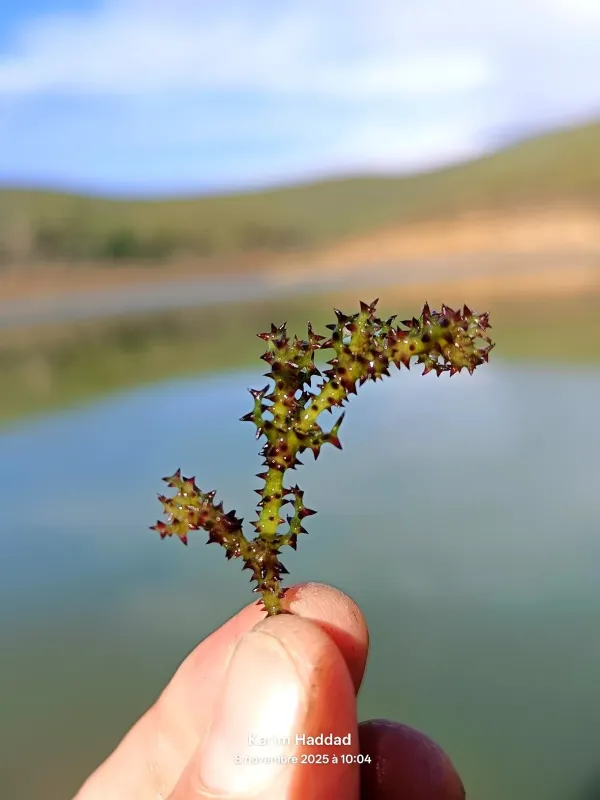
Botanically, the plant is characterized by highly branched, brittle stems and narrow, linear leaves with serrated margins. These small teeth, which give the plant its specific name, provide structural rigidity to the delicate foliage.
In terms of management, ensuring stable water levels and avoiding sudden turbidity increases are essential for maintaining the health of the stands. The plant is sensitive to significant shifts in water chemistry, including drastic changes in pH.
Yield
In the context of aquaculture, Najas armata serves as a crucial natural food source for various fish species. Its dense vegetation provides excellent shelter for fry and serves as a substrate for fish spawning.
The plant contributes significantly to the biological filtration of water, absorbing excess nitrogen and phosphorus. This process is essential for maintaining water quality and preventing harmful algal blooms in managed water bodies.
Harvesting excess biomass can provide organic material for composting or use as green fertilizer in agricultural practices. However, management must be balanced to ensure that the plant continues to provide essential ecological services.
The productivity of Najas armata is high in suitable conditions, with biomass density serving as a primary metric for evaluating its contribution to the aquatic ecosystem and potential as a resource for pond managers.
By effectively managing the growth of Najas armata, pond owners can create a self-sustaining environment that supports higher fish populations and improved water clarity throughout the active growing season.
Main diseases and pests
The primary threats to Najas armata populations include chemical pollution from agricultural runoff, specifically herbicides and fertilizers. Excessive nutrient loading can lead to imbalances that favor invasive species over native Najas.
Pests such as certain aquatic snails and insect larvae can graze on the foliage, though they rarely cause significant long-term damage unless the population is already stressed. Competition with invasive aquatic weeds remains a major concern.
Pathogens affecting the plant are often secondary to environmental stress. Fungal infections can occur if the water quality deteriorates, leading to tissue necrosis and the rapid decline of localized stands.
Management of the plant in intensive aquaculture requires careful monitoring to prevent overgrowth. Dense mats can lead to nocturnal oxygen depletion, as plant respiration consumes oxygen, potentially harming fish stocks.
Maintaining a healthy equilibrium in the aquatic environment is the best prevention against diseases. Regular water analysis and consistent monitoring of plant health help ensure the longevity of Najas armata stands.