
Spiny naiad
Najas marina
Description
Growing requirements
Najas marina, commonly known as the spiny naiad, is a submerged annual aquatic plant belonging to the Hydrocharitaceae family. It is a cosmopolitan species that thrives in a variety of freshwater and brackish environments across the globe.
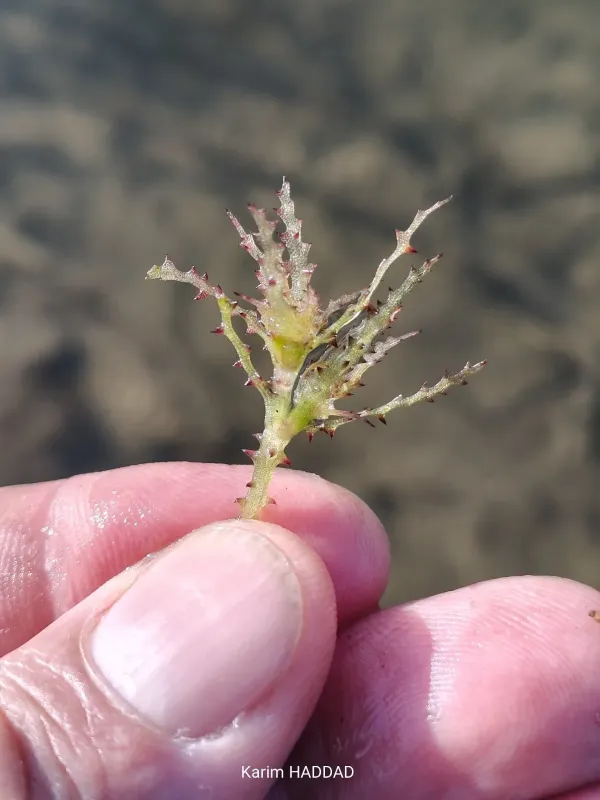
The plant features a brittle, branching stem with linear leaves that possess distinct, sharp spines along their margins. These characteristics make it a recognizable and significant component of aquatic vegetation in both natural and artificial ecosystems.
For optimal development, the spiny naiad requires abundant sunlight and nutrient-rich substrates, such as silt or organic-rich mud. Water clarity is a critical factor, as excessive turbidity significantly restricts its photosynthetic capabilities.
The plant demonstrates a remarkable tolerance for varying water temperatures and mineral levels. It generally prefers stable, shallow water bodies where it can establish dense colonies that provide essential structural diversity for aquatic organisms.
Management practices for this culture include regulating water levels and monitoring the chemical composition of the sediment. As a fast-growing species, it is highly efficient at nutrient absorption, which makes it an excellent choice for environmental phytoremediation.
Yield
The biomass productivity of Najas marina is notably high under favorable ecological conditions. Its rapid growth rate allows for repeated harvesting, providing a substantial amount of organic material suitable for various agricultural applications.
In aquaculture, the spiny naiad serves as a primary food source for herbivorous fish species and as a habitat for beneficial invertebrates. Its presence in fish ponds contributes to the overall stability of the aquatic food web.
The harvested plant material is rich in minerals and can be processed into organic fertilizers or high-quality compost. Utilizing this plant effectively turns a potential nuisance into a valuable resource for surrounding agricultural lands.
Yield estimation is determined by the density of the colony and the nutrient availability in the water. High-density cultivation requires monitoring to ensure the plants do not become an obstruction to water circulation or flow management.
Sustainable harvesting techniques ensure that enough biomass remains to allow the population to regenerate for the next season. This balance is crucial for maintaining long-term productivity without depleting the local seed bank.
Main diseases and pests
The spiny naiad is susceptible to infestations by filamentous algae, which compete for light and space. Heavy algal mats can smother Najas marina, leading to a significant reduction in the plant's health and eventual collapse of the colony.
Certain species of freshwater snails and insect larvae are recognized pests that feed on the soft tissues of the leaves. While they are part of the ecosystem, their overpopulation can severely damage the plant's structural integrity.
Pathogenic fungal infections represent a major health risk, particularly in stagnant waters where organic decay is high. These diseases typically manifest as localized rot that can quickly spread throughout the entire submerged vegetation.
Environmental stress, such as exposure to heavy metals or chemical runoff, inhibits the growth of the root system and weakens the plant's immunity. This makes it more susceptible to opportunistic pathogens and unfavorable environmental changes.
Disease management focuses on preventive strategies, including maintaining proper water aeration and managing the nutrient load of the pond. Avoiding synthetic pesticides ensures that the aquatic environment remains balanced and productive for all inhabitants.