
Najas malesiana
Najas malesiana
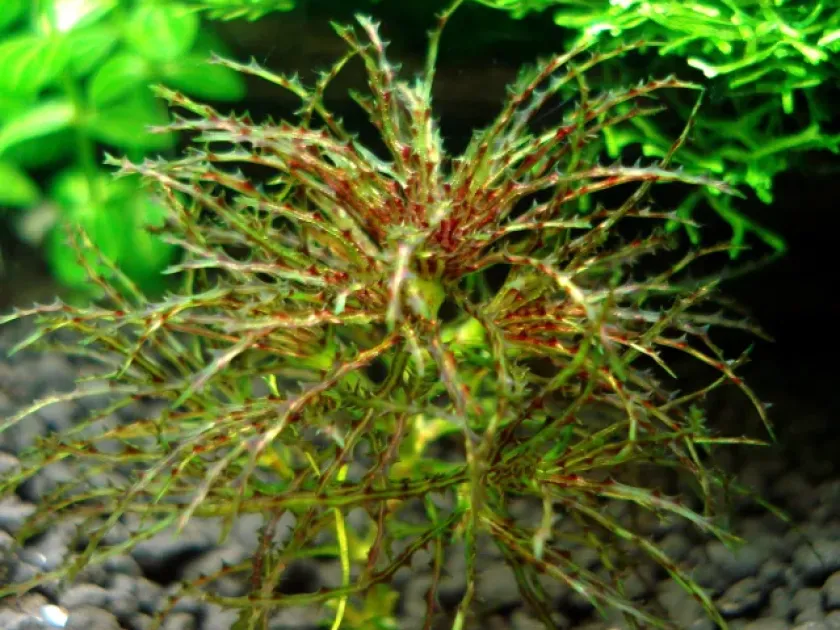
Description
Growing requirements
Najas malesiana is an aquatic plant species belonging to the Hydrocharitaceae family. This submerged macrophyte is natively found in the freshwater bodies of Southeast Asia, where it thrives in stable, nutrient-rich environments with minimal current.
The plant exhibits a delicate, branched stem structure with linear leaves that possess characteristic serrated margins. These morphological features distinguish Najas malesiana from other related species within the Najas genus, playing a crucial role in its adaptation to underwater life.
To cultivate this plant successfully, one must maintain water temperatures between 22°C and 28°C. It is highly adapted to tropical climates and requires a consistent environment to avoid physiological stress which can lead to leaf shedding or tissue decay.
Light intensity is a primary growth factor for this species. It requires moderate to high levels of artificial or natural lighting to sustain its rapid growth rate and metabolic activities, ensuring the plant remains vibrant and structurally sound.
Regarding water chemistry, Najas malesiana prefers slightly acidic to neutral pH levels. It effectively absorbs nutrients directly from the water column, making it a useful component in bio-filtration systems where it can help manage nitrate levels.
Main diseases and pests
The main threats to Najas malesiana health are overgrowth by filamentous algae and cyanobacteria, which compete for light and physical space. Ensuring good water circulation helps to mitigate these competitive pressures.
Invertebrate pests, such as certain species of aquatic snails and crustaceans, can cause physical damage to the plant's delicate stems and leaves. Regular monitoring and balanced ecosystem management are essential to prevent infestation and ensure the longevity of the plant colony.