
Moraea tulbaghensis
Moraea tulbaghensis
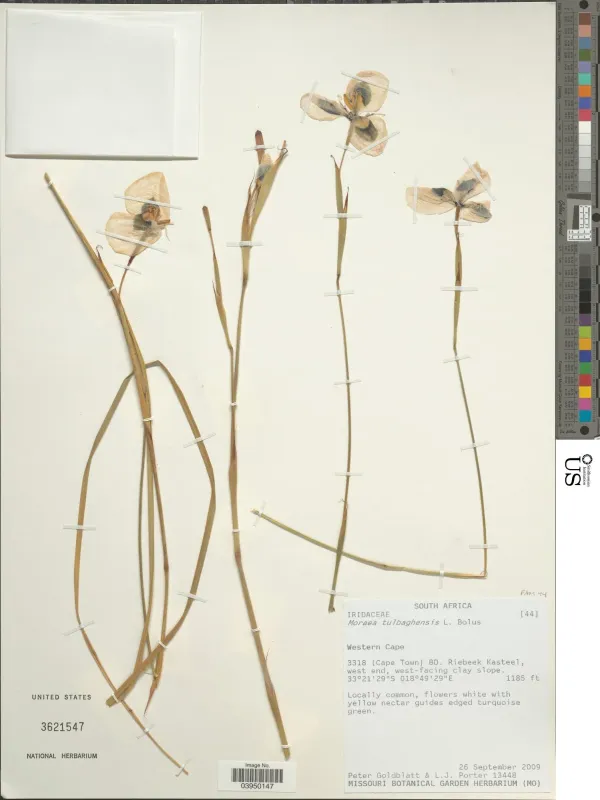
Description
Growing requirements
Moraea tulbaghensis is a distinct species belonging to the Iridaceae family, naturally occurring in the Western Cape province of South Africa, where it thrives in specific Mediterranean-like conditions.
As a bulbous geophyte, this plant requires a well-defined seasonal cycle, including a warm, dry summer dormant phase and a cool, moist growing season starting in autumn.
The soil must be exceptionally well-drained, ideally a gritty or sandy mix, to ensure that the delicate bulbs do not rot during the wet winter months of active growth.
Full sun exposure is a fundamental requirement for this species, as limited light results in weak, etiolated stems and a significant failure to produce flowers during the spring.
For container gardening, which is common in colder climates, it is essential to use pots with sufficient depth and drainage holes to prevent the accumulation of excess moisture.
Main diseases and pests
Root rot and bulb decay represent the primary biological threats to Moraea tulbaghensis, primarily triggered by overly damp soil conditions and inadequate air circulation around the crown.
Aphids are frequent pests that infest the flower stalks, causing stunted development and increasing the risk of virus transmission among the plant collection.
Red spider mites may become a problem in glasshouse conditions, especially when the ambient humidity is kept too low, leading to mottled and discolored foliage.
Slugs and snails are major external threats in garden settings, as they are attracted to the fresh, succulent spring growth of the foliage and emerging buds.
Successful management relies on preventive sanitation, such as removing old plant debris and maintaining strict control over moisture levels during the dormant period.