
Monsonia vanderietiae
Monsonia vanderietiae
Description
Growing requirements
Monsonia vanderietiae is a distinct succulent species belonging to the Geraniaceae family. Native to the arid regions of South Africa, this plant has evolved specialized biological mechanisms to thrive in environments characterized by extreme aridity and high temperatures.
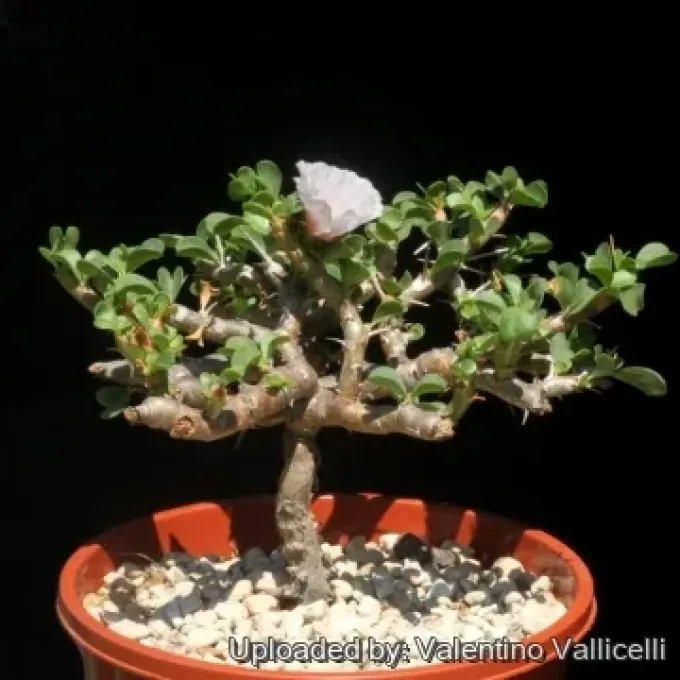
Botanically, the plant features a woody, succulent stem structure that functions as a water reservoir. Its small, often pubescent leaves are a critical adaptation designed to reduce transpiration and protect the internal moisture levels from intense solar radiation.
When cultivating this species, the soil composition is paramount; it requires a highly porous and gritty substrate. A mixture dominated by mineral components, such as pumice or coarse sand, is essential to facilitate rapid drainage and prevent water accumulation around the roots.
The cultural requirements dictate full, bright sunlight to maintain the plant's natural form and prevent etiolation. In temperate zones, it is strictly grown as a container plant, where it must be positioned in areas with optimal light intensity and consistent airflow.
The irrigation schedule must be strictly seasonal, mimicking the arid cycles of its natural habitat. During the active growth season, light watering is permitted only when the substrate is entirely dry; during the winter dormancy, the plant should remain almost completely dry.
Main diseases and pests
The primary threat to the longevity of Monsonia vanderietiae is root rot induced by improper irrigation practices or poor soil aeration. If the medium remains damp for too long, the succulent tissues can decompose rapidly, often leading to irreversible plant loss.
Pest management should focus on monitoring for common succulent insects like mealybugs and spider mites. Due to the fine hairs on the leaves, physical removal can be difficult, making preventative systemic treatments or appropriate horticultural soaps necessary for control.