
Monsonia herrei
Monsonia herrei
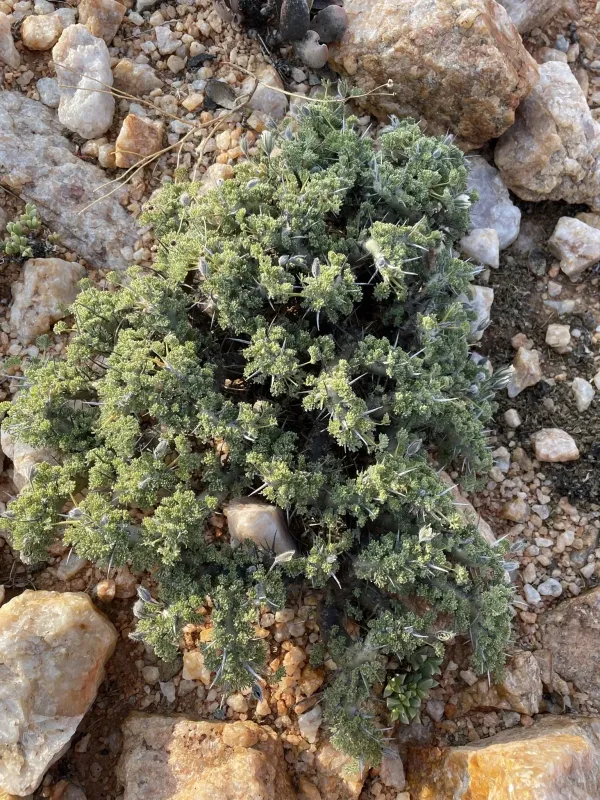
Description
Growing requirements
Monsonia herrei is a highly specialized caudiciform succulent belonging to the Geraniaceae family. Native to the harsh arid landscapes of South Africa and Namibia, it is prized by collectors for its architectural form.
The plant features a prominent, thickened stem known as a caudex, which acts as a vital water storage organ, allowing the plant to endure months of extreme dehydration in its natural habitat.
Cultivation requires a highly porous, inorganic substrate. A mix of pumice, coarse sand, and a minimal amount of organic soil is essential to ensure rapid drainage and prevent water accumulation around the root system.
High levels of solar radiation are necessary to maintain the plant's characteristic compact growth habit. In indoor environments, this often requires placement in the sunniest possible window or the use of professional grow lights.
The watering schedule must strictly follow the plant's growth cycle, with moisture provided only during the active growing season, and withheld almost completely during the dormancy period to prevent root rot.
Main diseases and pests
The most significant threat to Monsonia herrei is the combination of cold temperatures and high humidity, which leads to rapid decay of the delicate caudex tissues.
Pests such as mealybugs represent a common challenge, as they often hide within the crevices of the stem and the base of the leaves, where they are difficult to reach with topical treatments.
Fungal pathogens can arise if the substrate remains saturated for too long, necessitating the use of specialized, airy soil mixes and bottom-watering techniques when possible.
Environmental stress, including poor ventilation and excessive stagnant heat, can weaken the plant and make it susceptible to opportunistic infestations and bacterial rot.
Proactive management involves constant monitoring of the stem's firmness; any softening is an early warning sign that cultural conditions, particularly irrigation, require immediate adjustment.