
Monsonia camdeboensis
Monsonia camdeboensis
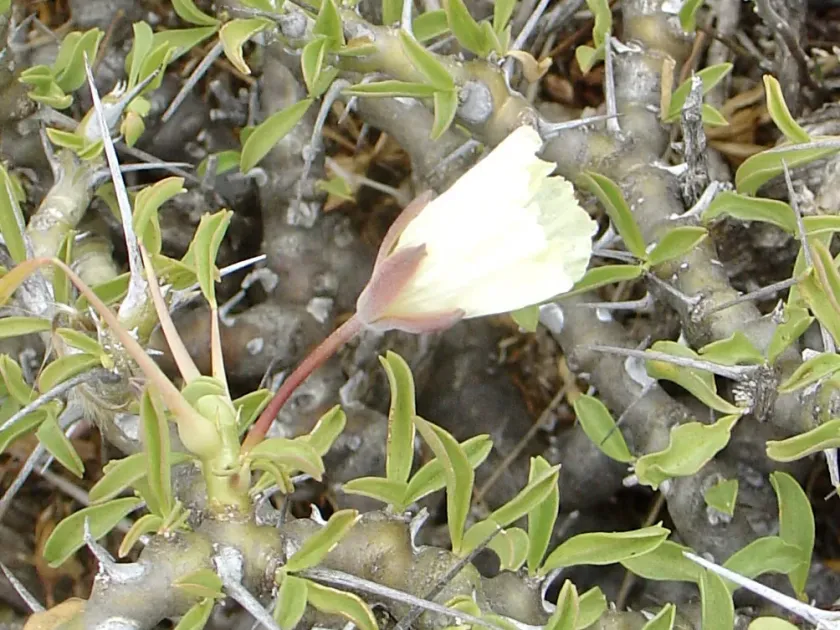
Description
Sowing dates
Seeds of Monsonia camdeboensis require specific conditions for germination that mimic the natural cycles of South Africa's arid regions. Sowing is best carried out in late winter or early spring.
For successful germination, the substrate must be highly permeable, consisting of a mixture of sand, perlite, and a small amount of coconut fiber. The temperature regime for germination should be between 20 and 25 degrees Celsius.
It is important to maintain high humidity during the germination period, but the soil should not be constantly wet to prevent rot. Seed burial depth should not exceed 5 millimeters.
After the first shoots appear, the plants need an active flow of fresh air. This prevents the development of fungal infections, which young seedlings are particularly sensitive to during their first weeks of life.
As they grow, seedlings should be gradually accustomed to drier air and direct sunlight. Pricking out is recommended no earlier than six months after the first true leaves have appeared.
Growing requirements
This crop belongs to the Geraniaceae family and is a unique geophytic succulent adapted to extreme drought conditions. In the wild, the plant inhabits the Karoo region of South Africa in stony soils low in organic matter.
The plant is highly demanding regarding lighting: normal development requires bright, direct sunlight throughout the entire day. Supplemental lighting may be necessary in greenhouse conditions.
The soil mixture must have excellent drainage, as water stagnation at the roots is fatal for this species. Using heavy clay soils is strictly prohibited, as they trigger root rot.
Climatic requirements include a pronounced dry dormant period when watering should be almost completely stopped. During the active growing season, watering should be moderate, performed only after the top layer of substrate has dried completely.
Mineral nutrition should be applied in limited doses, using specialized fertilizers for cacti and succulents with low nitrogen content. An excess of nutrients leads to a loss of compactness and plant stability.
Main diseases and pests
The main threat to Monsonia camdeboensis is fungal disease, which develops in conditions of high humidity and poor air circulation, specifically root and stem rot.
Pests common to succulents, such as mealybugs and spider mites, can attack the plant if cultivation techniques are violated. Mealybugs often hide in leaf axils or just below the soil surface.
Disease prevention consists of regular inspection of the root crown and monitoring the substrate moisture. If pests are detected, the use of systemic insecticides in mild concentrations is recommended.
It is important to monitor the state of the caudex, which is the plant's modified stem and a key indicator of its health. Any soft spots on it require immediate surgical intervention or fungicide treatment.
Adhering to quarantine when introducing new specimens into a collection or sowing is a mandatory condition for protecting against the spread of pathogens. Cleanliness of tools during repotting is also critical to prevent infection.