
Monsonia senegalensis
Monsonia senegalensis
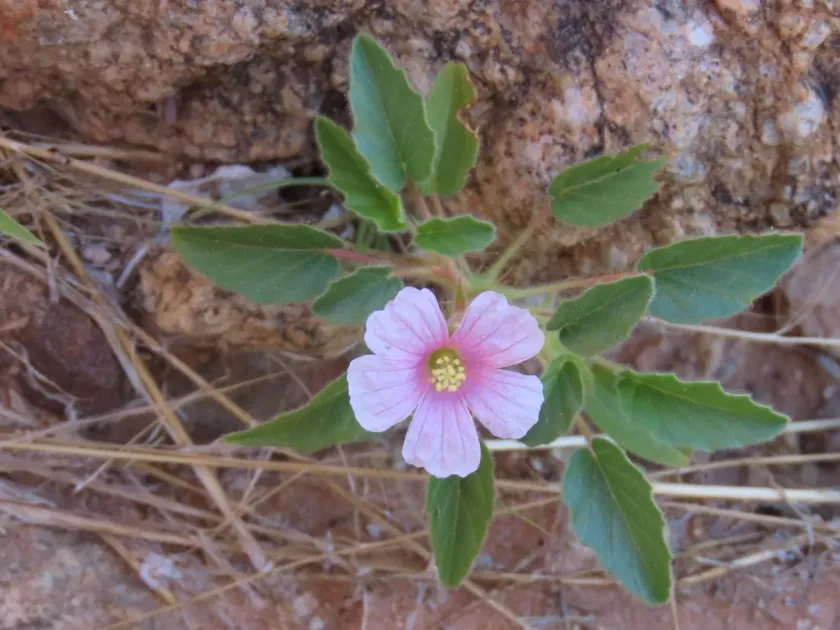
Description
Sowing dates
Monsonia senegalensis is a member of the Geraniaceae family, characterized by its annual growth habit and remarkable adaptation to arid environmental conditions.
The sowing season typically aligns with the onset of the first rains, which provide the necessary soil moisture levels for seed germination and initial establishment.
Optimal sowing requires warm, well-aerated sandy soils that facilitate quick root development and prevent early-stage seedling stress.
Seeds should be sown at a shallow depth, usually not exceeding 1 cm, to ensure efficient utilization of available moisture while promoting quick emergence.
The crop exhibits a rapid growth cycle, allowing it to transition from germination to flowering within a few weeks, which is vital for survival in its native range.
Growing requirements
This species thrives in high-light environments and is exceptionally tolerant of intense heat, making it suitable for cultivation in harsh climatic zones.
Soil requirements focus on excellent drainage; waterlogged conditions are detrimental to the plant and often result in immediate root system decay.
The plant performs well in nutrient-poor soils, demonstrating high resource-use efficiency and requiring minimal external fertilization for successful growth.
Optimal development occurs in temperatures between 25°C and 35°C, where the plant efficiently maintains its photosynthetic output despite low relative humidity.
Field management primarily involves simple weed control and ensuring adequate spacing to promote air circulation and minimize competition for soil moisture.
Yield
Monsonia senegalensis is primarily valued for its medicinal properties, with the entire aerial part of the plant being harvested for traditional therapeutic use.
The yield is highly dependent on rainfall distribution throughout the growing season, with significantly higher biomass production observed in wet years.
Harvesting is ideally conducted during the peak flowering stage when the concentration of bioactive secondary metabolites is at its highest level.
Besides its medicinal application, the plant serves as a supplementary fodder source in regions where traditional forage crops cannot survive the dry seasons.
The harvest must be timely, as the plant rapidly enters a senescent phase once the soil moisture is depleted, potentially leading to quality degradation.
Main diseases and pests
Fungal diseases represent the most significant threat to Monsonia populations, particularly during unexpected rainy spells or in areas with poor ventilation.
Various insect pests, including aphids and foliage-feeding larvae, can cause substantial damage to the plant's delicate leaves if not monitored regularly.
Root rot, driven by poorly drained soils and excessive moisture, remains the most common cause of crop loss in managed cultivation environments.
Herbivory by local wildlife also poses a persistent threat, as the succulent nature of the plant makes it an attractive food source in arid regions.
Integrated pest management strategies, focusing on site selection and hygiene, are essential to mitigate the impact of biological threats.
Harvesting
Harvesting is performed manually to ensure the integrity of the plant material and to select only the healthiest individuals for drying purposes.
Post-harvest processing involves rapid air-drying in shaded, well-ventilated areas to prevent the degradation of heat-sensitive compounds by direct sunlight.
Stored raw material must be kept in moisture-proof containers to avoid mold growth and to maintain the purity of the medicinal product.
Seed harvesting is conducted when the seed pods reach maturity, indicated by a change in color and the start of natural dehiscence.
Proper seed storage requires cool, dry conditions to preserve viability and ensure a high germination rate for the subsequent cropping season.